
イスタンブールの古代宗教
歴史的な都市ビザンツは、半島から黄金の角(ゴールデン・ホーン)までの一帯に広がっていました。この地域の象徴的な景観である黄金色こそが、「黄金の角」という名前の由来です。近年、この地域にある多くの近代的な建造物が取り壊され、歴史的な建造物が発掘され、博物館として再利用されています。東ローマ帝国の時代の宮殿が、いくつかの教会やモスクとともに残っています。この地域には、地元の家々や街並みから生まれる独特の雰囲気が漂っています。
ビザンツ時代のイスタンブールで見るべきもの
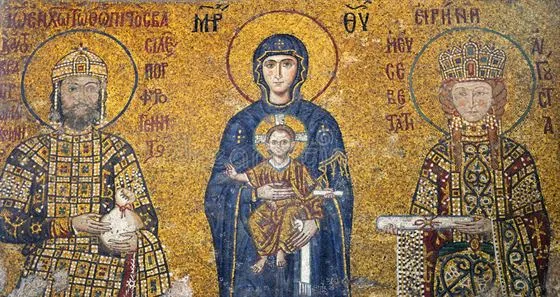
アヤ・ソフィア(グル・ジャーミィ)
テオトコス・パナギオティッサ教会(カンル・キリセ)
カリーエ・モスク(旧:ホラ地区の聖なる救世主教会)
ブラヘルナの聖母教会(パナヤ・ブラヘルナ聖泉)
パントクラトル教会(ゼイレク・ジャーミイ)
コンスタンティヌス・リプス修道院(フェネリ・イサ・ジャーミ)
テオトコス・キリオティッサ(カレンダーハネ・ジャーミイ)
ハギア・テオドロス教会 - ヴェファ・ジャーミイ(ヴェファ教会モスク)
聖セルギウスとバッカス教会(クチュク・アヤソフィア・ジャーミイ)
パナギア・ムフリオティッサ教会、フェネル地区
イスタンブールのエクメニカル総主教庁と聖ゲオルギウス教会
イスタンブールの貴重な聖なる美術品
イスタンブールのスルタンアフメット広場
イスタンブール is home to two of the world's most impressive religious buildings, each of which was constructed by a different Byzantine emperor to honor one of God's most prized qualities: peace or wisdom. Dedicated to Divine Peace, Aya Irini (Hagia Eirene) was constructed before the later Hagia Sophia (Hagia Sofiya). Both buildings were built by the Byzantine Emperor Constantine the Great when he built the city. They were rebuilt several times until Justinian ruled in the sixth century.
オスマン帝国の支配者たちは、宮殿の内部中庭にあるビザンツ様式のハギア・イレーネ教会を改修し、新たな用途に転用した。ハギア・イレーネ教会の半円形のアプスに施されたモザイク装飾は、偶像破壊運動時代の芸術を代表する好例であり、この建物の中で最も興味深い部分と言えるだろう。
Constantine the Great commissioned the original construction of the Ayasofya Grand Mosque (Hagia Sophia) in the 4th century. Final construction was completed under Emperor Justinian, and it served as the imperial cathedral of the Byzantine Empire for the next thousand years. Upon the Ottoman conquest of Constantinople in 1453, it was converted into a mosque by Sultan Mehmet II. With the help of architect Mimar Sinan, Hagia Sophia underwent extensive restoration during the Ottoman period, during which time it became one of the most significant buildings in the world thanks to the incorporation of minarets and other Islamic architectural elements. After 70 years as a museum, Ayasofya has been reborn as a mosque under the name Ayasofya Cami Kebir (the Grand Mosque), and it is now a freely accessible landmark for people of all faiths.
イスタンブール:カラキョイ、ガラタ、イスティクラル通り、タクシム広場
「カラキョイとガラタからタクシムまで続く遊歩道」グラン・リュ・ド・ペラ
ボスポラス海峡の対岸、歴史的な半島に位置するカラキョイは、過去と現在を結ぶ架け橋としての役割を果たしている。カラキョイは、この都市の主要な港であり、海運と商業の中心地であったため、文化と宗教が交差する場所として発展した。
One of the oldest buildings in Galata, the Surp Krikor Lusarovic Church, was constructed in the 14th century. It's been updated multiple times, and two churches have been built right next to it. It has the traditional layout of a basilica, with a single aisle covered by a cone-shaped dome.
Hundreds of thousands of White Russians fled the Russian Empire during the civil war a century ago, taking their culture and community with them as they fled to Istanbul. St. Panteleimon, one of three churches built on top of the old port buildings in Karakoy in the 19th century, is the most popular attraction there due to its beautiful frescoes and icons.
The Church of St. Anthony of Padua is a short distance from the Genoese Galata Tower (built in the 13th century) along Istiklal Caddesi. It was one of the three Levantine parishes in Beyoglu, alongside the Catholic churches of St. Mary Draperis and Saints Peter and Paul in Galata. The Italian Levantine architects Giulio Mongeri and Edoardo de Nari designed the Church of St. Anthony and oversaw its construction between 1906 and 1912. The building is an example of Venetian Neo-Gothic style. The social and spatial makeup of Pera exemplified the Orientalism of the Ottoman Empire. In the 1840s, Galata was rapidly developing into a significant mercantile port, and Istiklal Street was awash with imported goods. The population of Pera was comprised of people from many different backgrounds. Levantines, Greeks, Armenians, Jews, and Turks made up the bulk of the population. In addition to the many different Caucasian groups, there were also a sizeable number of Russians, Bulgarians, and Circassians living there.
By taking a stroll down what was once called "Grand Rue de Péra" but is now known as "Istiklal Street," tourists can experience a taste of the multicultural Istanbul of the 19th century when people of all faiths and backgrounds lived side by side. Garabet Balyan, Hamamcibasi Minas Agha, and Hovhannes Serveryan's Armenian Church of Three Altars (Surp Yerrortutyun Armenian Church, Uc Horan Kilisesi) is a striking local landmark. Crimea Memorial Church, or Christ Church as it is more commonly known, is a Gothic-styled Anglican church built in the nineteenth century. At the intersection of Istiklal Street and Taksim Square, you'll find Hagia Triada Greek Orthodox Church (Holy Trinity), the largest church on Istiklal Street. It was the first church to have a dome since the time of the Byzantine Empire. It was built in the 1800s.
トプカプ宮殿に収蔵されている貴重な宝物
イスタンブールのスルタナフメット広場
Has Oda, the Sultan's Privy Chamber, is located in Topkapi Palace, the administrative and residential center of the Ottoman Empire, and is home to priceless sacred relics. The key to the Ka'bah and other priceless artifacts associated with the Prophet Muhammad (s.a.w. ), his daughter, son-in-law, and companions have been safely stored at Topkapi Palace for the past 500 years. The mantle of the Prophet Muhammad (s.a.w. ), the Hirka-i Serif, was brought to Istanbul by Selim I. at the height of its importance. The hair from Prophet Muhammad's beard, known as the Sakal-i Serif, is another priceless artifact (s.a.w.).
オスマン帝国の壮麗なモスク
イスタンブールからエディルネ、そしてブルサへ。
オスマン帝国のスルタンが建設したモスクは、その建築様式から「セラティン・モスク」として知られています。これらのモスクは巨大で、複数のミナレットを備えています。オスマン帝国の最初の首都であったブルサにあるグランド・モスク(ウル・ジャーミ)とグリーン・モスク(イェシル・ジャーミ)は、オスマン時代における最初のセラティン・モスクです。第二代バヤジットが建設したバヤジット・モスクは、現在もイスタンブールに現存する中で最も古いセラティン・モスクとして広く認識されています。
Istanbul, the third and last capital city of the Ottoman Empire, has the most important Ottoman buildings.
The Suleymaniye Mosque is a great Ottoman mosque with a charming courtyard and surroundings, and it was commissioned by Suleyman the Magnificent to the great imperial architect Sinan. The best examples of the well-known Iznik tiles can be seen in the Sultanahmet Mosque, or the "Blue Mosque," as it is known in the West. In addition to the large mosques already mentioned, you can learn more about Ottoman aesthetic preferences by touring smaller but no less charming mosques like the ones in Rustem Pasha (Rustempasa) and Sehzade.
For nearly 600 years, the Ottoman Empire had its capitals in three different cities, each of which became a cultural and architectural treasure under its rule.
Hadrian, the great Roman Emperor, is the inspiration for the name of the Ottoman Empire's second capital city, Edirne. Beyazit Kulliye, an old hospital complex, the magnificent Ottoman bridges across the Meric (Maritsa) River, and the Selimiye Mosque, a masterpiece of the great architect Sinan, are just some of the magnificent masterpieces of early Ottoman architecture that can be enjoyed here. The one-of-a-kind cuisine and atmosphere of the old bazaar will leave visitors with fond memories.
オスマン帝国時代のイスラム文化における見どころ
ヌル・オスマニエ・モスク、イスタンブール
イスタンブールのスレイマニエ・モスク
スルタンアフメット・モスク、イスタンブール
イスタンブールのファティフ・モスク
イスタンブールのシェフザデ・モスク
ヌルオスマニエ・モスク
ヤヴズ・セリム・モスク
ミフリマ・スルタン・モスク
ドルマバフチェ・モスク
イェニ・ヴァリデ・クッリイェ(複合施設)
イスタンブールのグランド・バザール
ベヤズィト・クルリイェ(複合施設)、エディルネ
セリミエ・モスク、エディルネ
ウル・ジャーミイ(大モスク)、ブルサ
ブルサ、イェシル・トゥルベ(緑の霊廟)