
カッパドキアへの旅行
想像してみてください。目を開けると、そこにはまるで絵本のような光景が広がっています。鮮やかな太陽が、どこまでも青い空から昇りかけています。さらに上空では、熱気球がゆっくりと空へと昇っていきます。多くの観光客が到着した際に最初に目にするのは、まさにこの光景です。 カッパドキアしかし、それは美しい馬の国が提供する魅力のごく一部に過ぎません。
トルコのカッパドキア
アクサライ、ネヴシェヒル、ニデ、カイセリ、キルシェヒルの各都市の一部は、カッパドキア地方に含まれています。「カッパドキア」という言葉を聞くと、多くの人がウチサール、ギョレメ、アヴァノス、ウルギュプ、デリンクユ、カイマクリ、イフラを思い浮かべるでしょう。これらの場所はすべて、数百万年もの年月をかけて、地表が幻想的な形に削り出された地域に位置しています。そこには、地上から何メートルも下へと続く、妖精の煙突や地下都市、寺院などがあり、神秘的で、まるで別世界のような雰囲気が漂っています。
この地の地形が変化しやすいという特徴から、数多くの異なる文化や文明の舞台となってきた。地下には多数の都市が点在しており、まるで時間が止まったかのように佇んでいる。カッパドキアは、アッシリア人、ヒッタイト人、ローマ人、ビザンツ人、初期のキリスト教徒、イスラム教徒など、さまざまな民族がそれぞれの足跡を残したため、まるで野外博物館のようだ。
ギョレメ
1985年以来、ユネスコの世界遺産に登録されているギョレメは、その周辺一帯に神秘的な雰囲気を漂わせています。ここでは、柔らかい岩をくり抜いて作られた教会が、静かに、そして神秘的に佇んでいます。
ローマ時代、この地域に住んでいた人々は、ギョレメを墓地として利用していたと考えられています。ドゥルムシュ・カディル、ユスフ・コチ、エル・ナザール、サクリ、聖母マリア、キリチュラルに捧げられた教会では、魔法のような雰囲気を感じることができます。ギョレメ野外博物館では、聖バシレイオス大帝とその兄弟たちが、キリスト教の思想を調和させました。トカリ教会、修道院、聖バシレイオスの礼拝堂、聖バルバラ教会、エルマリ教会、イランル教会、カランルク教会、チャルクル教会には、息をのむような美しい壁画と精巧な建築が施されており、まるで建設されたばかりのように、今でも新鮮で鮮やかな印象を与えます。
これらの教会の中には、今もなお、魅惑的な壁画や装飾が施され、聖書の場面が描かれている。ギョレメ野外博物館にある教会の中で、特に有名なのは、暗い教会(カラヌルク教会)と、トカリ教会(曲がった教会)である。トカリ教会は、皇帝の依頼によって建てられ、ラピスラズリで装飾された点が特徴である。
この教会の特徴的な点は、鮮やかな壁画です。聖十字教会は、暗い教会(カラヌルク教会)としても知られる、比較的小規模なビザンツ様式の建造物で、11世紀後半から12世紀初頭に遡ります。教会前のポーチにある小さな窓からわずかな自然光しか入り込まないため、この名前が付けられました。しかし、光が少ないおかげで、壁画を含む教会の貴重な遺物が保存されることになりました。聖書に登場する場面を描いた絵画が教会全体やポーチに描かれており、色彩豊かで見る者を圧倒します。この教会が多くの観光客にとって必見の場所であることは当然と言えるでしょう。
ユチサール
巨大で多孔質の岩の上に立ち、雲に届くような景色を想像してみてください。ユチサール城は、熱気球、飛行機、または猛禽類に乗って上空から眺める場合を除き、その景色を楽しむのに最適な場所です。ユチサールには、カッパドキア地方で最も美しいハイキングコースの一つがある鳩の谷があります。谷に点在する巨大な岩の造形を眺めながら散策してみましょう。それらは自然の力によって作り出されたものであり、鳩たちが巣から飛び立ち、川の流れによって作られたトンネルを通り過ぎる羽ばたきの音を聞きながら、その雄大さを感じることができます。現在、城の周辺には様々なお土産を販売する店や露店が並んでいます。カーペットなど、多種多様な商品が販売されています。 大理石の装飾品から鏡、そしてもちろん、おいしいドライフルーツやナッツ類まで。
ウルギュップ
ギョレメから西へ向かい、そこから簡単に東へ行くことができます。東には、果てしなく広がるユルギュプの魅力的な観光スポットが待っています。カッパドキア全体で最も人口の多い場所であるユルギュプは、この地域の他に類を見ない風景を探検するための素晴らしい出発点となります。ホテル、レストラン、ショップで賑わうアナトリアの町と、その近くにある洞窟住居が組み合わさることで、他に類を見ない風景が生まれます。この地域の最も特徴的な点は、これらの岩の上に建てられた石造りの豪邸です。町全体に漂う神秘的な雰囲気に加えて、ユルギュプにはカッパドキアで最も活気のあるナイトクラブやバーもいくつかあります。
ムスタファパシャ村(シナスソス)
ユルギュプの南にわずか6キロメートルしか離れていないムスタファパシャは、文化と建築の宝庫です。カッパドキア地方では、多くのギリシャ系キリスト教徒(ルーミとして知られる)が、長年にわたり、近隣のイスラム教徒と平和に共存していました。かつてシナソスと呼ばれていたムスタファパシャは、そのような町のひとつであり、今日では喧騒から離れた静かなオアシスとなっています。美しい邸宅(コナック)は、精巧な石組みが、堂々とした新古典主義様式の外観の裏に隠されています。それらの間を少し散歩するだけで、穏やかな時代を追体験することができます。
The minaret of a Seljuk mosque built in the 17th century dominates one of the town's two squares, and other major landmarks include the Ottoman-era Şakir Paşa Madrasa and the impressive Church of Constantine and Helen, built in the late 19th century.
Between the first and eleventh centuries, early Christians flocked to the Gomeda valley to the west of Mustafapaşa. A smaller version of the Ihlara Valley. Houses, churches, and caves have been carved out of the valley's live rock over the centuries. If you make it there, be sure to look down at the river winding through the valley below.
オルタヒサール
ウルギュプから6キロ離れた場所にあるオルタヒサルの城塞は、その麓にカッパドキア地方の優れた民家建築の数多くの例が集中しているため、必見の観光スポットです。西側に位置するユズムリュ教会もまた、見逃せない観光名所です。オルタヒサルの城は、当時としては画期的な建築であり、初期の多層建築の好例の一つでした。巨大な妖精の煙突が、ヒッタイト時代にシルクロードを往来するキャラバンを護っていました。この地域の最も高い場所に位置するこの城を訪れることは、まるでタイムマシンに乗って中世に戻るような体験です。
リンゴやジャガイモなどの地元の農産物を保存するために作られた貯蔵スペースや、地中海から輸入された柑橘類を保管するためのスペースが、谷の斜面に点在している。周辺の谷には、教会や修道院など、美しい宗教施設が点在している。その中には、ハラッチ・デレシ修道院や、バルカン・デレシ、タヴシャンリ・デレシ、サルジャ・デレシ、チャンバズリ・デレシなどの教会がある。
アヴァノス(ヴァネッサ)
アヴァノス(ヴァネッサ)は、その独特な生活様式が魅力的な場所です。キジルマ川は数千年にわたりアヴァノスを流れ続けており、川底で見つかる油分を含んだ柔らかい粘土のおかげで、この町はヒッタイト時代から陶器の生産地として知られるようになりました。本質的な不完全さを持つ粘土を使って、他に類を見ない芸術作品が作られ、それらは自然な色合いで彩られ、そしてもちろん、その独特な魅力を引き立てるためにターコイズブルーの色が使われます。陶芸教室に参加して、自分だけの「偶然の傑作」を生み出したり、賑やかなバザールで陶器を見て回ったり、あるいはただ川辺でくつろいだりするのも良いでしょう。
キジル・ヴァディ(赤い谷)
息をのむほど美しい夕焼けの景色を求めているなら、レッドバレー以外に探す必要はありません。地元の人々も観光客も、チャヴシン村とオルタヒサルのどちらにも近いレッドバレーに集まり、夕焼けを眺めます。日が沈む前に、観光客には、赤い凝灰岩が作り出す独特の地形の中を散策し、展望台の最適な場所に移動して、その壮大な景色を堪能することをお勧めします。
チャヴシュイン
Although your next location might not scream "Come see me!" from afar, I guarantee that you will be completely blown away by it once you set foot inside. The nearby Çavuşin village is only a few minutes drive from Göreme. Passing through this seemingly normal village will lead you to ancient ruins and fairy chimneys leading up to the town square. Following the paths will lead you to a region well-known for its churches and clergy houses, where you can continue your exploration of the ruins. Through this passageway, you can reach the earliest churches, which were constructed between the 1st and 10th centuries. After a half-hour stroll, you'll reach the churches of Güllüdere and Kzlçukur, but the most alluring site is waiting for you near the base of a cliff: the Church of St. John the Baptist, the largest and one of the oldest in all of Cappadocia.
パシャバーグは、「修道士の谷」としても知られています。
Located about a kilometer away from the Göreme-Avanos road that leads to Zelve is Paşabağ, also known as Monk's Vineyard. Here in this enchanted land, you'll find some fairy chimneys, some of which are home to local chapels and others to human settlements. Tuff and volcanic ash from the conical bodies of the capped fairy chimneys here. The hat is made of tough rocks, making it more durable than the body's rock composition. Because of this, the fairy chimneys took their distinctive shape.
パシャバーにある、そのような奇妙な形状の「妖精の煙突」の一つには、聖シメオンを祀る礼拝堂と、隠者のための避難所が併設されています。礼拝堂への入り口に通じる、煙突のような狭い通路には十字架が飾られています。上から下へ、煙突の中に長さ10フィートから15フィートの部屋を掘り出して作りました。彼らは岩を敷き詰めた場所で寝て、ロープで食料の入ったバケツを降ろして、地元の人々から食料を分けてもらっていました。
ゼルヴェ
Zelve, one of Zelve's three valleys, has the highest concentration of fairy chimneys. The best time to go hiking to see the sights is first thing in the morning. The valley is home to several significant churches, including Balikli and Üzümlü, both of which depict the eerie beauty of the ancient monastic lifestyle.
デヴレント
カッパドキアは、自然、歴史、文化の魅力にあふれているため、アナトリア地方の中心部に位置する人気の観光地となっている。中でも、「三美」と呼ばれる奇岩群は、この地域の象徴となっている。
The "Three Beauties" are three fairy chimneys that look like a father, a mother, and a child. They are in the Ürgüp district of Cappadocia, which is in the central Anatolian province of Nevşehir.
ギュルシェヒル
ギュルシェヒルは、ネヴシェヒルの北西20キロメートル、キズイルマク川(赤い川)の南に位置し、かつてはゾロパッソスと呼ばれ、その後、セルジューク朝時代にはアラプスンと呼ばれていました。ギュルシェヒルから3キロメートル離れた場所には、アチュクサラユ遺跡があり、ここは9世紀から10世紀にかけての岩窟教会や、凝灰岩の岩に彫られたローマ時代の岩窟墓で知られる、重要な司教座都市でした。ギュルシェヒルの象徴的なキノコ型の奇岩群も、この地域で見ることができます。バックギャモン(ホースルーフ)、小さな宮殿(多層居住区)、四柱修道院、揺りかご型のヴォールト建築、十二柱教会、階段状の住居などは、いずれも重要な宗教的・建築的ランドマークです。現在では、ハイカーたちはこの地域を好んで訪れます。 周辺の他の観光スポットと比較して、アクサライ遺跡は特におすすめです。この遺跡には、谷を縫うように続く全長7キロメートルの遊歩道があり、文化やスポーツの拠点となっています。
カッパドキアの地下都市
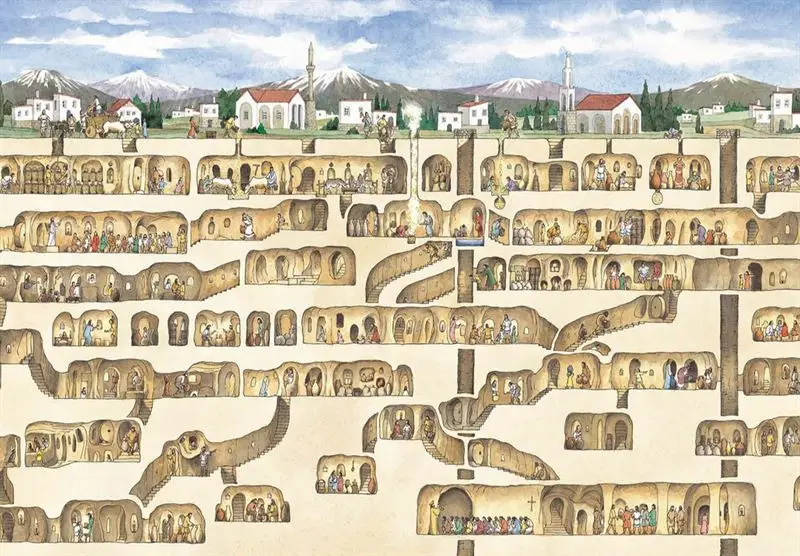
デリンクユ 地下都市
Derinkuyu Underground City, in the Nevşehir neighborhood of Derinkuyu, is one of the top attractions in the city. For centuries, locals have retreated there when threatened. There are about 85 meters of depth in Derinkuyu's underground city. Barns, cellars, a refectory, churches, boileries, and other structures typical of an underground city can be found in this mysterious location. Additionally, the second floor houses a missionary training academy. A barrel vault was chosen for the school's ceiling because it is not typically found in subterranean communities. The classrooms are to the left of the main corridor. Upon reaching the bottom of the stairwell after traversing the third and fourth levels of the underground city, one will find a church designed in the shape of a cross. Wells and ventilation shafts that run to lower levels are not accessible from the upper levels, and the tops of some wells are hidden from the upper ground level to prevent poisoning during any invasion. Derinkuyu Underground City opened in 1965, but only 10% of it is currently open to the public.
カイマクリ 地下都市
Going south from Nevşehir, you'll reach the roads leading to the underground cities of Kaymakli and Derinkuyu. The Kaymakl underground city is a labyrinth of tunnels and rooms carved into the earth eight levels below Kaymakl Castle. There are living quarters, a church, and even a cemetery above the first-floor stable. Nearly 100 tunnels connect the surface with the city below, and the residents of Kaymakl village built their homes around them. Even though there are eight levels below ground, only four are open to the public.
オズコナック 地下都市
アヴァノスから約15マイル(24キロメートル)離れた場所に、地下都市のオズコナクがあります。火山性の花崗岩によって形成された凝灰岩の層が、この都市の建設に使用されており、そのため、山の北側の斜面で豊富に見られるのです。この都市は広大なエリアに広がっており、地下通路でつながっています。
構造:各階をつなぐ通路は非常に狭く、また長くなっている。これは、デリンキュユやカイマクルとは大きく異なる点である。 地下都市幅わずか5cmしかない細い煙突が設けられており、精巧な彫刻が施された部屋の扉が閉められると、空気の循環を促すことができる。また、地下都市としては珍しく、トンネルの壁に通路が設けられており、おそらくは追跡してくる敵に熱い油をかけるために使われたのだろう。カイマクリやデリンキュと同様に、オズコナクの地下都市にも、換気用の煙突、井戸、噴水、そして防御用の石が設置されている。
マージ 地下都市
The village of Mazi, also known by its ancient name, "Mataza," is situated 18 kilometers south of Ürgüp, to the east of the Kaymakli Underground City. There are four distinct entrances to the underground city of Mazi, the main one being a corridor lined with irregular stones. Because of the massive bolt stone installed in the narrow passageway, no one can enter or leave the underground city without permission. The interior is purposefully narrow to allow for smooth movement of the bolt stone. From the stables, you can take a short passageway to the church of the underground city. Another bolt stone can be used to seal off the entrance to this area. In contrast to the church in Kaymakli Underground City, which featured a central apse and relief-adorned facades, the one in Mazi featured an apse carved into a long side corner. Though the renovation isn't yet finished, you can still get a sense of the eerie atmosphere of what it was like to live here before and marvel at the ingenious ventilation system.
タトラリン 地下都市
With its underground city, churches, and residential architecture, Tatlarin town, 10 km north of Acigol district, is another captivating place in Cappadocia. It rests on the side of a hill with the same name. The church's narthex, which connects the two main sections of the building, is now a ruin. There is a clear delineation between the various scenes in the remarkably preserved frescoes. The floor is a dour shade of gray, and the walls and figures are painted purple, mustard, and red. The size of the venues, the number of food stores, and the abundance of churches in the 1991-opened underground city make it feel like a military garrison or monastery complex. The two-story underground city is still open for tourism, and its standout amenity is a flushing toilet.
イルハラ渓谷
Ihlara Valley is the place you're looking for if you want to go where no human has gone before, both in terms of time and geography. The 14-kilometer-long valley has been a religious hub ever since the early days of Christianity, as evidenced by the abundance of ancient temples and churches dotting its landscape. In keeping with the monastery's ideals, frescoed churches have been carved into the rocks throughout the area. You're in luck if you want to see the buildings and explore their mesmerizing interiors. The Agacalti, Sümbüllü, Yilanli, Kokar, Prenliseki, Eritaş, Direkli, Saint Georgeus, Karagedik, Ala, Bezirhane, Bahattin Samanli, and Batkin Churches are just 14 of the many that welcome visitors. You'd better get ready because this 382-step ladder down to the valley floor can take anywhere from two to four hours. Don't let the time of day put you off; there are gazebos along the Melendiz Stream where you can rest and drink some tea to wash the dust of your journey away.
セリメ教会
The Selime Church, with its two stories and origins in the eighth and ninth centuries, is the largest of all the churches in Cappadocia. Images of Christ and Mary ascending to heaven are just one of many found in the cathedral. Just outside the Selime cathedral and monastery is a high corridor that was used to transport camels. Caravans stopped in Selime because of the market, and the camels were herded into the cathedral. The entire structure was constructed to serve as a haven for worshippers and those seeking a place to relax. There is no more significant aspect of Selime Monastery than its role as a seminary for local clergy. In addition, Selime Cathedral hosted the first raucous ritual. Byzantine influences can be seen in many of the rock-cut buildings, which are primarily churches. It's also worth noting that the cathedral's upper levels were designed to resemble a castle.
ハジュ・ベクタシ・ヴェリを偲んで。
イスラム教がアナトリアに広まるにつれて、多くの偉大なイスラム思想家や学者がこの地域に住むようになりました。神秘主義者であるハジュ・ベクタシ・ヴェリは、今日ではハジュベクタシとして知られていますが、トルコで生まれ、イスラム教に改宗しました。彼は13世紀の終わり頃にアナトリアに移り住みました。この賢者の哲学の中核となる理念は、1948年に採択され、アナトリアのさまざまなトルコ系集団を結びつける上で重要な役割を果たした世界人権宣言の精神と本質を体現しています。ネヴシェヒルから45キロ離れたハジュベクタシにある14世紀のモスク複合施設には、モスク、ゲストハウス、台所、願掛けの木、修行者のための場所に加えて、ハジュ・ベクタシ・ヴェリの墓が含まれています。 現在は博物館となっているこの建物は、ユネスコの世界遺産暫定リストに登録されています。