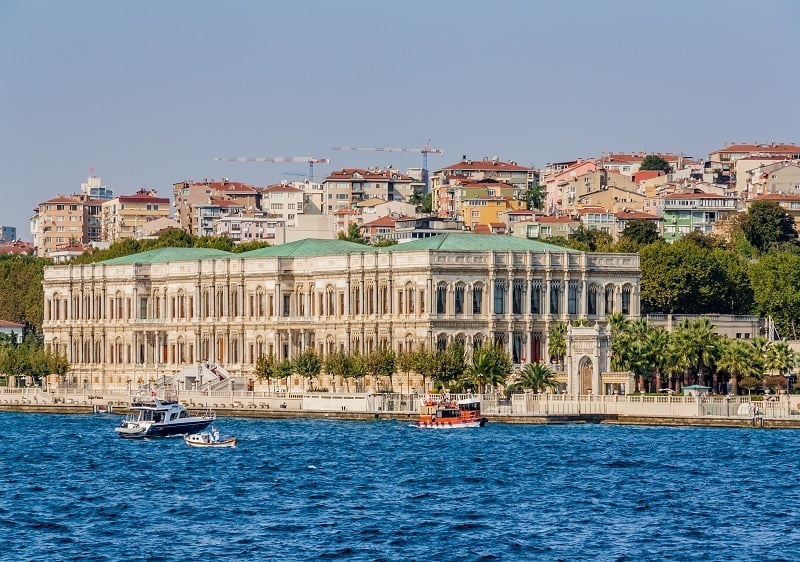
オスマン帝国末期に建てられた宮殿の代表的な例として、イスタンブールのベシクタシュ地区にあるチラーガン宮殿が挙げられます。現在は、ケンピンスキー系列の5つ星ホテルに改装されていますが、依然として建築上の傑作であり、重要な歴史的・文化的価値を保持しています。イスタンブールを訪れるなら、この壮麗な宮殿は必見であり、今やこの街の象徴となっています。
チラガン宮殿(イスタンブール)
宮殿があるセラガン地区は、ペルシャ語で「たいまつ」を意味する「セラグ」という言葉に由来する名前が付けられました。これは、有名なオスマン帝国の祝典であるセラガン・フェスティバルが、夜にたいまつで照らされたチューリップ畑で行われたためです。アルメニア人建築家のニゴゴス・バリアンは、スルタン・アブドゥルメジットからこの宮殿の建設を依頼されました。イスタンブールの水道システムの改修と新しい鉄道の建設のために調達された資金が、ボスポラス海峡のヨーロッパ側に位置する、ベシクタシュ地区とオルタキョイ地区の間に建設されたこの建物に使われました。このプロジェクトの期間は、およそ12年でした。これは、オスマン帝国の最後の宮殿でした。
1910年、この建物の中央暖房ダクトで火災が発生し、建物内部は焼失したが、外壁は無事だった。その後、1990年代に改修と新しいホテルの増築が行われ、現在は高級ホテルとなり、世界有数のホテルグループである「リーディング・ホテルズ・オブ・ザ・ワールド」の一員として、世界最大級のホテル運営会社であるケンピンスキーによって運営されている。トルコで最も豪華なホテルが、ここに位置している。複合施設内の他の建物は、現在は教室として使用されている。宮殿エリア内には、ボスポラス海峡を一望できる素晴らしいレストランがある。
During the time of Sultan Abdulaziz, the last of the Ottoman sultans to build his own palace rather than rely on those of his forefathers, the Raan Palace was designed by Armenian palace architect Nigoayos Balyan and built by his sons Sarkis and Hagop Balyan between 1863 and 1867. Wood was used for the floor, ceiling, and roof, while marble of various colors was used for the exterior. There is a beautiful marble bridge that connects the palace to the Yldz Palace on the hill behind it. A high garden wall separates the palace from the rest of the world. Interior and exterior work on the palace continued until 1872. A few months after his dethroning, Sultan Abdulaziz was found dead in his beautiful palace on May 30, 1876. His nephew, Sultan Murad V, occupied the Raan Palace but only lasted 93 days as ruler. He was deposed by his brother Abdul Hamid II, who claimed he was mentally unstable, and he died on August 29, 1904, while under house arrest.
チラガン宮殿の所在地
On November 14, 1909, the Ottoman Parliament was given permission by Sultan Mehmed V to meet in this building during the Second Constitutional Monarchy. However, on January 19, 1910, just two months later, the palace was completely destroyed by fire, with only the outer walls surviving. The garden, which was previously used as a football field by local club Beşiktaş J.K., was purchased in 1987 by a Japanese company, which restored the damaged palace and built a cutting-edge hotel complex in the adjacent garden. While the modern hotel building first opened its doors in 1990, the renovated palace didn’t welcome guests until 1992. It has been renovated into a five-star Kempinski hotel with plush rooms and two eateries for hotel guests.