
터키 건축사에서 이름을 떨친 유명 건축가들
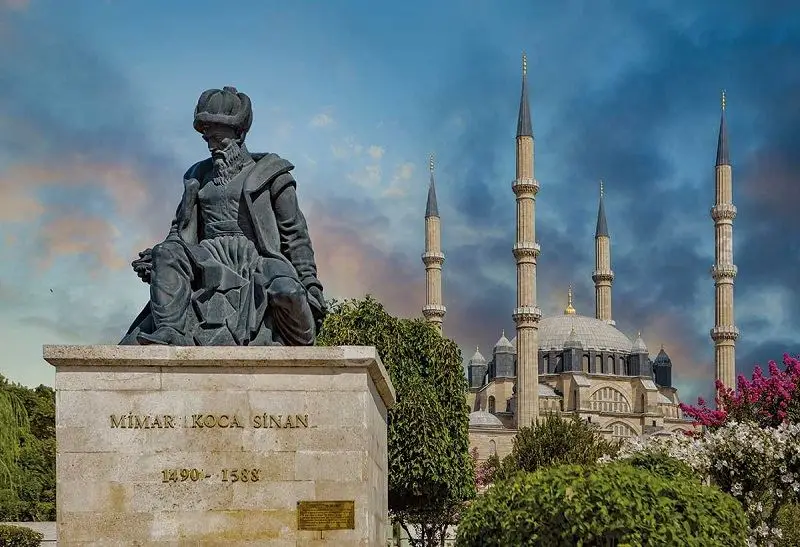
위대한 제국 건축가 미마르 시난 (1490–1588)
Mimar Sinan, also known as Koca Mimar Sinan (Grand Architect Sinan), was born in 1490 and served as the Ottoman Empire's principal architect. His worldwide fame and acclaim attest to the quality of his work. It was as a Janissary for the Ottoman government that he first gained notoriety, but he quickly rose through the ranks to become a renowned military engineer. At age 50, he was named head of the office of royal architects and given the mandate to construct an imperial mosque called the Sehzade (Prince/Shahzade) Mosque, which is now recognized as one of the earliest masterpieces of his prolific career. Throughout his life, he served three different sultans: Suleyman the Magnificent, Selim II, and Murad III. What made him so brilliant was the way he could see how engineering and architecture could work together. To increase the amount of usable space within a structure, he tried out different variations of domes, both single and multi-dome, and, by taking this empirical approach, he was able to achieve geometric purity an integral unity. Scholars identify 477 buildings as having been designed or constructed by him, but only 196 remain standing today. Some of his most notable works include the Suleymaniye Mosque, the Mihrimah Sultan Mosque, the Kilic Ali Pasa Complex, and the Haseki Hurrem Sultan Baths. The Selimiye Mosque in Edirne is widely regarded as his masterpiece among his incredible body of work.
발리안 가문 (18세기 및 19세기)
The Balyans were an illustrious Ottoman Armenian architectural family responsible for some of the empire's most impressive palaces, mansions, kiosks, and mosques in the 18th and 19th centuries. Six sultans ordered them over the course of five generations, starting with Sultan Selim III and ending with Abdulhamid II.
The Balyan family rose to prominence at the turn of the 18th century, when the spread of Western ideas throughout the empire was at its height. They were instrumental in the development of the Neo-Ottoman style, which fused elements of the Neo-Classical and Baroque movements. The family designed seven palaces, including Dolmabahce, four factories, one barracks, one mosque, seven churches, two hospitals, three schools, two weirs, one fountain, and one mausoleum, with Garabed Amira being the most well-known member of the architectural staff.
All over Istanbul right now, you can find the family's magnificent creations. The tombs of Mahmud II and Abdulmecid; the Dolmabahce, Beylerbeyi, Ciragan, Yildiz, Kucuksu, Ihlamur, Baltalimani, and Adile Sultan (Kandilli) palaces; the Aynalikavak, Izmit, Mecidiyekoy, Zincirlikuyu, Ayazaga, Kalendar, and countless other mosques and palaces.
미마르 케말레딘 베이 (1870–1927)
1870년에 태어난 아흐메트 케말레딘은 ‘미마르(건축가) 케말레딘’이라는 이름으로 더 널리 알려져 있습니다. 그는 오스만 제국의 마지막 시기와 터키 공화국의 초기에 건축가이자 복원 전문가로 명성을 얻었습니다. 베다트 테크와 함께 그는 터키적인 요소를 건축 양식에 중시한 최초의 민족 건축 운동의 선구자였습니다. 미마르 케말레딘은 당대의 독일 건축에서 영감을 받았지만, 이스탄불의 역사 지구에 있던 타야레 아파트에 세워졌던 호텔은 그가 독특한 터키 건축 양식과 정체성을 발전시켰음을 보여줍니다.
베다트 텍(1873~1942)
최초의 국가 건축 운동에 관해 이야기할 때, 베다트 테크와 비교할 만한 사람은 없습니다. 1873년은 그가 19세기 말에 태어난 해입니다. 그는 갈라타사라이에서 고등학교를 마치고 파리에 있는 명문 프랑스 고등 교육 기관인 에콜 센트랄과 에콜 데 보자르에 다녔습니다. 그의 초기 경력에서 그는 오스만 정부에서 두 가지 중요한 역할을 수행했습니다. 첫째, 우체국 및 전신국 산하 건축가로 임명되었고, 둘째, 궁궐의 수석 건축가로서 일부 20 궁궐의 개조를 감독했습니다. 그의 초기 작품으로는 카스타모누 주지사 관청과 이스탄불 중앙 우체국이 있습니다. 그는 소환되었습니다. 터키 공화국이 선포된 후, 그는 터키 대국민 의회를 설립하기 위해 앙카라로 이동했습니다. 세다트 테크의 거주지였던 하이다르파샤와 모다 페리 선착장, 그리고 잔카야 가지 저택은 그가 설계하고 건설한 다른 주목할 만한 건축물 중 일부에 불과합니다.
튀르구트 잔세베르(1921-2009)
튀르키예의 건축가이자 도시 계획가인 투르구트 잔세베르는 1921년에 태어났습니다. 그는 아가 칸 건축상을 세 차례 수상했습니다. 이스탄불 국립 미술 아카데미에서 건축학 학위를 받은 후, 세다트 하키 엘뎀의 조수로 일하기 시작했습니다. 그는 자신의 건축 개념을 구상하기 위해 나라 곳곳의 다양한 표현 방식을 참고했습니다. 이스탄불 부위크아다에 있는 아나톨리아 클럽 호텔(1951~1956)과 보드룸에 있는 데미르 홀리데이 빌리지(1971)는 그의 대표적인 작품 중 하나입니다.
세이피 아르칸 (1903년~1966년)
Modernist architect Seyfi Arkan was born in Istanbul in 1903. He worked during the early years of the Turkish Republic. After a fruitful period of study at the Istanbul Fine Arts Academy, he took advantage of a scholarship to further his education in Berlin under the tutelage of Prof. Hans Poelzig, whose teachings profoundly affected his outlook and technique. One of the most prominent architects of the era, he was enlisted by Ataturk to create the Cankaya Presidential Residence. Even though he lived during the same period as the First National Architectural Movement, his work stands out from the crowd. He did not base the conceptualization of his design on national identity, as did Vedat Tek and Mimar Kemalleddin, but rather on universal architectural principles.
세다트 하키 엘뎀 (1908년~1988년)
터키 현대 건축의 선구자였던 세다트 하키 엘뎀은 1908년에 태어났습니다. 외교관의 아들이었던 엘뎀은 어린 시절과 청소년기를 유럽에서 보냈으며, 프랑스에서 초등학교를, 독일에서 고등학교를 다녔습니다. 터키로 돌아온 후, 그는 베다트 텍과 귀일로 몽게리가 가르치는 수업을 들으며 미술 아카데미에 다녔습니다. 대학을 졸업하자마자 그는 장학금을 활용하여 유럽 전역을 여행했습니다. 그곳에서 그는 페레와 포엘치히와 협력하며 여러 도시를 방문했습니다. 그의 건축 양식은 터키와 유럽 학자 모두에게서 받은 교육의 영향을 크게 받았습니다. 아르데코, 국제주의 양식, 심지어 르 코르뷔지에의 양식까지, 그의 작품에는 다양한 양식이 반영되었습니다. 초기 작품에는 르 코르뷔지에의 영향이 나타나지만, 그는 결국 오스만 전통 건축 양식에 특화되었습니다. 엘뎀은 역동적이고 끊임없이 변화하는 스타일로 인해 명확하게 분류하기 어렵습니다. 아가올루 하우스, 이스탄불 대학교 과학대학, 이스탄불의 플로리아 시설 등은 그의 대표적인 작품 중 일부입니다.
몽게리, 알라우리, 다란코는 19세기 이스탄불에서 활동한 세 명의 건축가입니다.
With the Tanzimat Reforms, the Ottoman Empire as a whole was exposed to western influences for the first time (1839–1876). As part of this transformation, Istanbul was updated in the fashion of Europe's dominant architectural style, Neo-Classicism. European architects were the first to use this style, and later Christian Ottoman architects were recruited to further spread it. To name just two examples, the first was the British architect W.J. Smith, who was hired to construct the British Embassy, and the Swiss architect Gaspare T. Fossati, who was hired to construct the Russian Embassy. Many architects, such as Valluary and Jachmund, were sent to Istanbul during the reign of Abdulhamid II to either build or research the history of Ottoman architecture. As a result of their research, a blend of Neo-Classical and Ottoman elements emerged. The School of Fine Arts (1882) and the Imperial Archeological Museum are two of Vallaury's most recognizable landmarks. Raimondo d'Aronco, on the other hand, introduced Art Nouveau elements to 이스탄불이 두 가지는 옐디즈 궁전의 여러 건물과 카라쾨이 모스크에서 모두 찾아볼 수 있습니다.