Hotel → Istanbul Airport · Your day, thoughtfully arranged
Ephesus in a day. Your private escape from Istanbul.
01DAY
The journey begins
Luxury Ephesus Tour from Istanbul
Experience the ultimate journey through history with our Luxury Ephesus Tour from Istanbul. Travel in style with exclusive transfers and enjoy a private guided experience to one of Turkey’s most iconic ancient cities. This tailored tour is perfect for travelers seeking an intimate, luxurious, and informative exploration of Ephesus’ historical sites, including the Temple of Artemis, the House of the Virgin Mary, and the Library of Celsus. Whether you’re an avid historian or simply love to travel in comfort, this tour promises an unforgettable adventure.
Why Choose Our Private Guided Tour to Ephesus?
When it comes to exploring Turkey’s rich historical and cultural heritage, our private guided tours stand out for their luxury, exclusivity, and attention to detail. With expert guides, personalized itineraries, and seamless logistics, your journey from Istanbul to Ephesus will be as enriching as it is comfortable.
We will pick you up from the hotel and head towards the airport for the Izmir domestic business class flight. After landing at Izmir Airport, drive to Selcuk town to visit Ephesus Ancient City. The first stop is the Virgin Mary’s House; upon German nun Anna Katherina Emerich's dream, the Lazarist priests followed the descriptions and the signs and then discovered the house in 1891.
According to Catholic belief, Mary was taken here by St. John, and she spent the rest of her earthly life there. After the Virgin Mary’s House, we proceed to Ephesus Ancient City, the capital city of Asia Minor during the Roman era. According to myth, Ephesus was founded by the Greek commander Androculos around 1,000 BC. Moreover, Alexander the Great, Lysimachus, Coressus, and Antiochus II either invaded or ruled in this city.
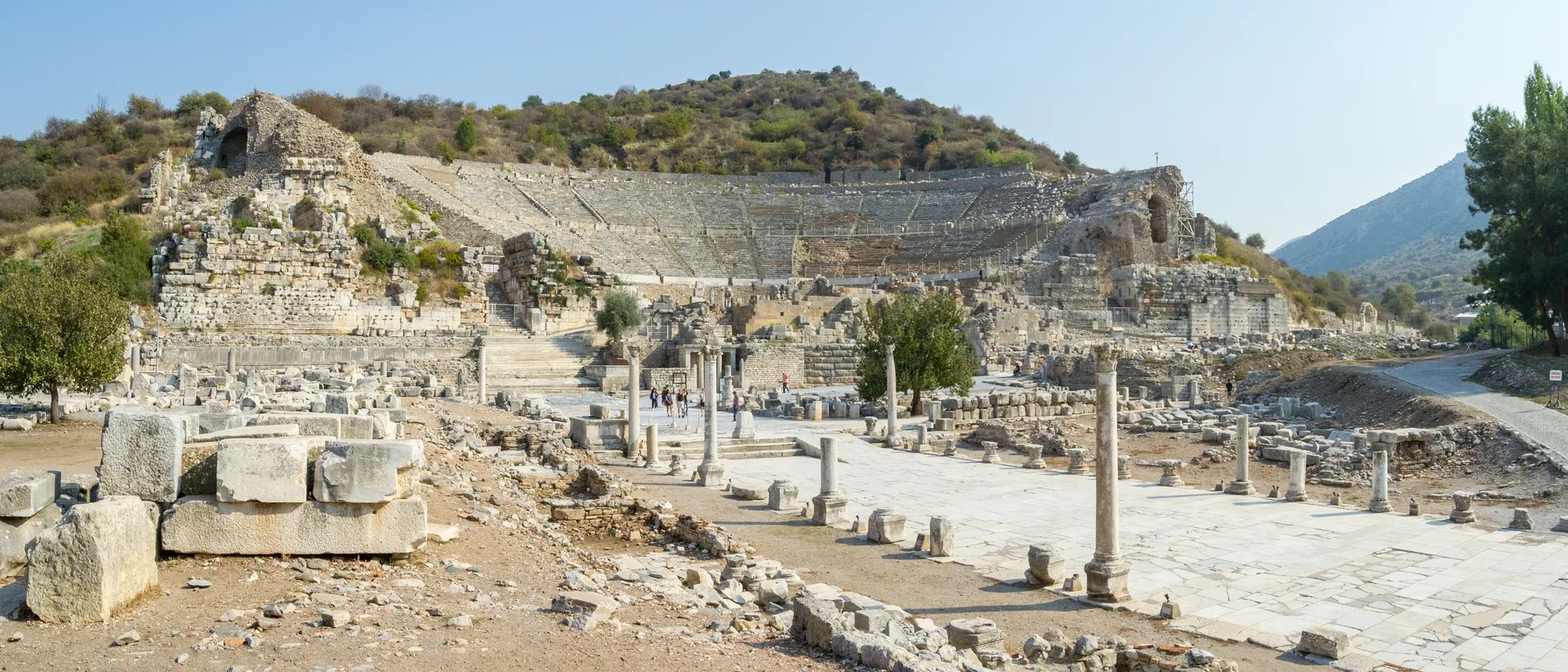
While the excavations are still going on, you will see the remainings such as; State Agora, a marketplace, and a meeting point. Odeon (Bouleuterion), concert house, and council. Town Hall and Artemis Sanctuary. Domitian Square, a complex, consists of a temple, fountain, and a bath. Curetes Street, colonnaded and monumental Street in Ephesus. The Hadrian Temple, dedicated to Emperor Hadrian, dates to 2C AD. Latrines, the public toilets. Celsus Library proves to us that how Ephesians were intellectual dates back to 2C AD. And the library had 12,000 scrolls.
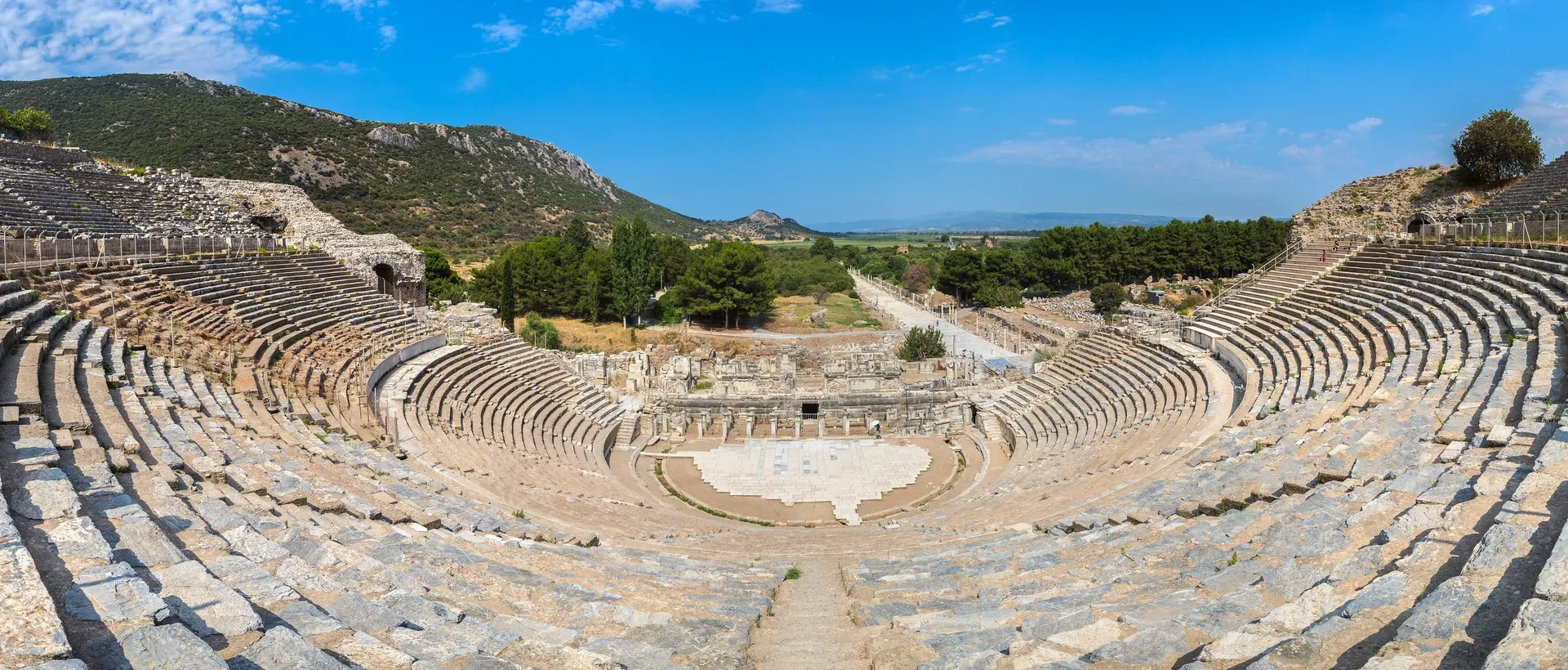
Forum is a commercial center located by the port. The Great Theater is the largest ancient theater with a 25,000 capacity.
After Ephesus Ancient City, we drive to lunch at a local restaurant. And the next stop is Isa Bey Mosque, built-in 1375 by the Anatolian Seljuks. Unlike Modern and Ottoman architecture, It has geometrical architecture, a roof, and two minarets. The mosque is still functioning for the five times prayers.
After Isa Bey Mosque, we drive to the Temple of Artemis, one of the seven ancient wonders of the World.
After the Private Ephesus Tour, drive back to the airport. After landing back in Istanbul, transfer back to the hotel.
Choose your experience
Considered in every detail.
Original service options · Final arrangements are confirmed with your personal quotation.
01 / Service collection
Private Service
$1720 Starts from
VIP Airport Meet & Greet
Chauffeured Airport Transfers by Exclusive Vehicle
Entrance fees, mentioned in the itinerary
Private Professional Tour Guide at Tour
Entrance fees, mentioned in the itinerary
VIP Chauffeured Vehicle During Tour
Economy or Business class flight tickets from Istanbul to Izmir
Economy or Business class flight tickets from Izmir to Istanbul
16 questions · Thoughtful answers. Select a question to explore the details.
01What is Ephesus?+
Ephesus is an ancient Greek city located in present-day Turkey. It was one of the most important cities of the ancient world and is home to many well-preserved ruins.
02How far is Ephesus from Istanbul?+
Ephesus is approximately 536 km (333 miles) from Istanbul.
03How long does it take to get to Ephesus from Istanbul?+
The journey from Istanbul to Ephesus takes about 1.5 hours by plane, 8 hours by train, and 9 hours by car.
04What is a private Ephesus tour?+
A private Ephesus tour is a personalized tour of the ancient city of Ephesus that is led by a professional guide who can customize the tour according to the preferences of the individual or group. It is a private tour, so there will be no other tourists in the group.
05What are the benefits of a private Ephesus tour?+
A private Ephesus tour allows you to customize the itinerary according to your interests and preferences. You can also ask questions and learn more about the history and culture of Ephesus from a knowledgeable guide. Additionally, private tours offer more flexibility in terms of timing, allowing you to avoid crowds and see the sights at your own pace.
06What are some of the highlights of a private Ephesus tour?+
The highlights of a private Ephesus tour include a visit to the ancient ruins of Ephesus, the Library of Celsus, the Temple of Artemis, and the House of the Virgin Mary. You can also explore the nearby towns of Selcuk and Sirince.
Words from our guests
Journeys remembered.
46 guest reviews
★★★★★
From the moment we were greeted at the airport to the end of our tour, everything was seamless and luxurious. The business class flights, private chauffeured transfers, and expert guide made our visit to Ephesus truly unforgettable. Walking through the ancient ruins, especially the Celsus Library and the Great Theater, was like stepping back in time. The flexibility and personalized attention from the guide allowed us to explore at our own pace. Highly recommend this tour for anyone looking for a premium travel experience!
Sophia L., USA2009-07-09★★★★★
Romos Travel exceeded all expectations! The attention to detail was evident throughout the entire day. Our guide was incredibly knowledgeable and passionate, providing fascinating insights about Ephesus, the Virgin Mary’s House, and the Temple of Artemis. The VIP service, from airport transfers to the exclusive vehicle, made us feel pampered every step of the way. We also appreciated how customizable the tour was to fit our preferences. A must-do for anyone visiting Turkey!
Rajesh K., India2009-04-06★★★★★
This tour redefined the meaning of luxury travel. From the business class flights to the private guide who was a treasure trove of historical knowledge, everything was perfect. We loved visiting Isa Bey Mosque and learning about its unique architecture. Having a private tour meant we could avoid the crowds and truly immerse ourselves in the history of Ephesus. Romos Travel thought of everything, and their professionalism shone through.
Emma R., Australia2009-08-28★★★★★
Our day trip to Ephesus from Istanbul was a dream come true. The organization and planning were flawless, and the VIP treatment made us feel like royalty. Our guide tailored the experience to our interests and answered all our questions with enthusiasm and expertise. The highlight for us was standing in the Great Theater and imagining the history that unfolded there. A truly enriching and stress-free experience!
Michael & Sarah T., UK2009-10-10★★★★★
I can't recommend Romos Travel's Luxury Ephesus Tour enough! Every detail was handled with care and precision. The guided tour was rich with stories and history, making the ancient city come alive. The luxurious touches, like the exclusive vehicle and personalized service, made this more than just a tour—it was an experience to remember. Lunch at the local restaurant was also a delight! Thank you for an amazing day!
Fatima H., UAE2009-07-03★★★★★
This was hands down the best tour we’ve ever taken. The organization, the guide’s depth of knowledge, and the stunning sites of Ephesus were incredible. The Virgin Mary’s House was a spiritual highlight, and the Temple of Artemis was awe-inspiring. Everything was made so easy and comfortable, from the hotel pickup to the business class flights. We will absolutely book with Romos Travel again!
Carlos V., Mexico2009-03-05
Private Ephesus Day Trip from Istanbul
Private Ephesus Day Trip from Istanbul
How to protect sightseeing time on a private Ephesus day tour
A private Ephesus day trip from Istanbul is worth planning around your time at the ruins. Allow for both airport transfers, then decide whether you want a closer look at the city layout or a shorter circuit around the principal public spaces.
On arrival in the Aegean, make Ephesus the centre of the day rather than one of several stops of similar length. The time spent linking the airport to the ancient site does not help you understand the ruins, so protect the available hours on the ground. Ask the guide to describe what you will be able to see at a gentle pace.
Read this experience as a series of choices about time, place and the people you are travelling with. Write down what made you open this page before you start comparing it with other options. If there are several people in the group, ask each person for one thing they would be disappointed to miss. That small exercise makes it easier to see which experiences are central to the trip and which would be pleasant if the timing works.
Then decide whether the experience should be the focus of a day or part of a longer plan. Compare from the first pickup to the last drop-off. Look at the time you can actually spend at the places that matter, allowing for the intervals in between. A long programme on paper can still leave very short visits if transfer time, a meeting point or a return deadline has been left out of the comparison.
For a day itinerary, the difference between available hours and useful time at the destination matters more than the name of the package. Use the published programme to see where the day’s main experience sits before deciding what else can fit.
Airport sequence and meeting point
Check the pick-up in Istanbul and the onward arrangement near İzmir before discussing a site entry time. The route from the airport to Ephesus is part of the usable day.
Draw the approach as three steps: where you start, where you actually meet, and where the planned activity begins. These can be different even if the hotel or a transport hub is mentioned on the itinerary. Save the confirmed meeting address and a written description of the entrance. If the party is coming from different rooms, hotels or terminals, decide where everyone rejoins before anybody sets out on their own.
Separate the time you need to be present from the time a vehicle, guide or venue expects to start. That distinction is useful on arrival days and when the first planned stop has a fixed window. Carry the written confirmation somewhere you can open it offline. Check how to contact the organiser if the first arrangement changes after you have left, and agree who in the group will make that call.
Do a short rehearsal on the map without relying on the map’s estimated driving time alone. Think about the final approach, building entrances, stairs and luggage, then include the time needed to gather the group at the start. If one person is likely to need more time, plan to meet the party together at the point that works for them. A practical start makes the following itinerary easier to keep flexible.
Read the streets and public spaces of ancient Ephesus
On a guided visit to ancient Ephesus, follow how the streets, monuments and public spaces connect. Let your guide know which questions you came with so they can use the time inside the site where it counts most.
Choose two things that deserve a close look and decide what an overview would be enough for. Let the first have room for questions, interruptions and a change of perspective. At the second, pay attention to a detail you might miss if you were moving quickly. That could be the relationship between two buildings, the way the waterfront meets a neighbourhood, or how a venue uses its space. The purpose of choosing is to give those details time.
Ask which parts need advance arrangements and which are easier to interpret or experience once you are there. For an interior, consider the time needed to get in, orient yourself and spend a few minutes without feeling rushed. Where the experience mainly happens outside, ask how the proposed position, light, season or weather could change your view. Those are better ways to compare proposals than counting the number of stops listed.
Give the team a practical example of your interest. An interest in history could mean the layout of an ancient city, the way a particular palace was used, or a wish to understand an active cultural tradition. A wish for comfort could mean a particular seat, a less hurried route or space for a conversation. Examples make a brief actionable and invite the organiser to suggest something specific to this experience.
Marble, gradients and shorter routes
Discuss uneven surfaces and time on your feet before the guide sets the route. If the group prefers to walk less, ask which sections can still give an informative overview.
The group that wants architectural detail may spend longer near monumental public buildings. Another group may prefer to follow how the route slopes through the city, pausing where the context is clear. The good version of the day is the one that supports what you came to learn, even if it covers fewer named stops.
Describe access in terms of what someone is comfortable doing for a sustained period. Include stairs, uneven ground, boarding, standing and the distance between useful places to stop where applicable. People with the same broad requirement can have very different preferences. One traveller may be comfortable walking slowly but prefer to avoid steep steps; another may want a short standing period with a reliable place to sit afterwards.
Ask whether the plan can be adjusted without losing its main purpose. A shorter route can work well if it still includes the setting or explanation you wanted. If the group may split for one part, agree where to meet again and how long each part should take. Share which requirements are essential and which are preferences so the organiser can check them against the actual vehicle, venue or proposed route.
Consider comfort across the entire outing. A long interval without a chance to pause can matter more than the length of a single walk. Discuss shade, seating and a convenient break before confirming a busy stretch. If a person uses an aid or needs help getting in and out of a vehicle or venue, ask for the specific approach and space that will be available rather than relying on a general accessibility label.
Where optional stops fit
Another visit in the Selçuk area can be meaningful, but only if it leaves enough time for Ephesus and for the airport return. Ask which stop the guide would drop first if time is limited.
Mark the parts of the plan that depend on an outside decision, such as the order of timed visits, operating conditions or a transport connection. Keep them separate from changes your own group could make. This shows whether an alternative would require changing a booking or simply making a different choice while you travel. It also makes it easier for the organiser to explain what they can confirm for your date.
Build in one realistic alternative and discuss when you would choose it. Identify what would cause you to switch, who has the final information and which other parts of the day would be affected. A nearby break, a shorter visit or a change of sequence may keep the day worthwhile. An alternative works best when it serves the same interest and does not add a new fixed deadline.
Use local time when comparing the sequence in a written itinerary. If a piece of the journey is uncertain, leave the commitments around it movable until the important details are confirmed. For a fixed onward booking, tell the organiser the time by which you personally want to be there. That is more useful than giving just the departure time, because it includes the margin your group is expecting.
Keep the final time you need to be back in view throughout the day. A stop that looks easy to add at the start can make the last part feel rushed if travelling back involves a different route or a fixed booking.
Take time for a break near the site
Decide whether you want a short lunch before or after the main visit. Use the break to reset expectations for the rest of the day rather than committing to a distant stop.
Think about what you want from the time around the planned experience. You might want to be close to a particular neighbourhood after it finishes, travel directly to a hotel, or have time for a meal or a quiet pause. That preference can affect the route even when it is not an activity in its own right. Identify how each member of the group will use the time that is left free.
Where there is a choice of base or end point, compare the actual approach as well as how a place looks in a description. Consider the length of the next transfer, the final walk, and whether you can change your mind about a meal or short outing without rearranging a vehicle. Ask the team to mark the difference between time reserved in the itinerary and time you will arrange independently.
Leave one natural break in the right place rather than expecting several quick stops to make the plan feel restful. Timing a pause near a useful transition can improve the whole day. If you have a restaurant, room or evening arrangement in mind, state whether it is a firm commitment or a preference. That allows the organiser to take it into account without treating it as another confirmed inclusion.
When there is just one day, a break near the main route can be a better use of time than travelling to a separate destination for it. Identify what would make the pause enjoyable in its own right.
Compare a same-day visit with an overnight Aegean route
A same-day Ephesus visit makes sense if your room and evening are already fixed in Istanbul. If you want the archaeological visit to sit inside a longer trip, compare the Istanbul and Ephesus itinerary and review what changes in the travel schedule.
Discuss where a brief pause near Selçuk fits rather than counting on a particular lunch or shop. If flights leave less time than hoped, identify an optional visit away from the archaeological route that can be dropped before the main site is shortened.
Compare the alternatives by asking what you would gain and what you would spend time on. For each option, write down one reason you would choose it, one element you would have to give up, and one thing you would want the team to verify. Do the comparison with your actual dates and group in mind. A longer or more elaborate arrangement is worthwhile only if the extra time solves a real priority for you.
Keep one flexible element in the plan that does not affect everyone’s bookings. If the group decides to linger, pause or reorder the day, that element can move without losing the central experience. Ask which parts can be changed after confirmation and which might have change terms. This matters particularly if you are coordinating a separate guide, vehicle, ticket or onward arrangement for the same day.
What the travel team needs
Send your travel dates, hotel and preferred walking pace. Ask the team to separate flights, transfers, private guiding and applicable admissions in the proposal.
Put the facts that determine the quotation at the start of your message. Give dates, group size, your starting location and the commitments that cannot move. Follow with what you want to prioritise, where you are flexible and the access or comfort requirements the organiser needs to consider. If your dates are uncertain, explain which range is possible. Keep the brief short enough that the team can see what matters without searching for it.
Read the reply as a proposed sequence and a list of responsibilities. Check where each arrangement begins and ends, who is providing it, what appears in the quoted price and what would be settled separately. Make sure changes to the programme or the experience are easy to distinguish from optional requests. Where cancellation or a change in conditions is possible, ask how the confirmed booking terms would apply to your particular arrangement.
Before committing, check the dates and names against the rest of your trip. Ask the organiser to confirm any assumptions you had to make while reading the programme, and keep the written reply with your travel details. Once the important parts are clear, mark which choices you would prefer to make during the experience. That final distinction is what lets the plan feel considered without taking away the freedom to use your time well.