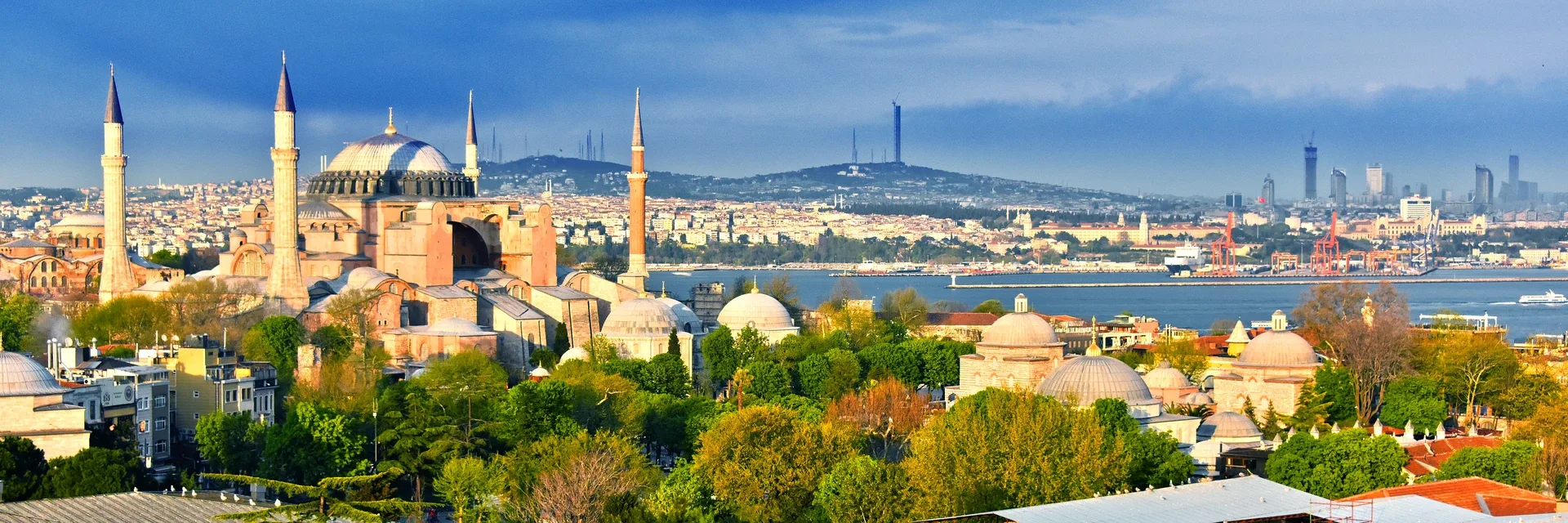
Embark on an unforgettable journey through Istanbul’s rich history with our Luxury Istanbul Old City Tour. This private experience takes you to iconic landmarks such as Hagia Sophia, the Blue Mosque, and Topkapi Palace, offering exclusive access and insights from expert guides. Discover the magic of Sultanahmet’s cultural heritage in comfort and style.
Discover Sultanahmet’s Historical Landmarks in Style
Experience Istanbul’s old city like never before. Our Luxury Istanbul Old City Tour is meticulously designed for discerning travelers seeking a personalized exploration of cultural highlights. From the awe-inspiring Hagia Sophia to the serene beauty of the Blue Mosque, every detail is crafted to ensure an enriching experience.
Private Istanbul Old City Tour
Pick up from the hotel by your guide to start the Private Old City Tour. Your private, professional tour guide will be introducing the ancient sights of Istanbul.
Today you will explore the following highlights of Istanbul.
Hippodrome: An ancient Roman and Ottoman square where the chariot races were held. Within the square is some Roman remains, an Egyptian Obelisk, Serpent Column, and Constantine Columns.
The Blue Mosque: An Ottoman Imperial mosque built by Sultan Ahmet I in 1609-1616 CE, famous for the blue Ottoman tiles.
Hagia Sophia: Once the largest cathedral of Christianity when it was built in 532-537 CE by the Roman Emperor Justinian; later converted into a mosque by the Ottomans.
Topkapi Palace: The Ottoman Sultan Mehmed II built the palace after the conquest of Constantinople. Topkapi Palace was the home of the royal family and the headquarters for the Ottoman Empire’s administrative center.
Basilica Cistern: Was built by the Roman Emperor Justinian in 6C CE. The Basilica Cistern was the main water supply to the Roman Palace and the churches. It has over three hundred columns within and houses the head of the ancient Greek figure Medusa. The head is the base of two columns and is viewed upside down and right-side down.
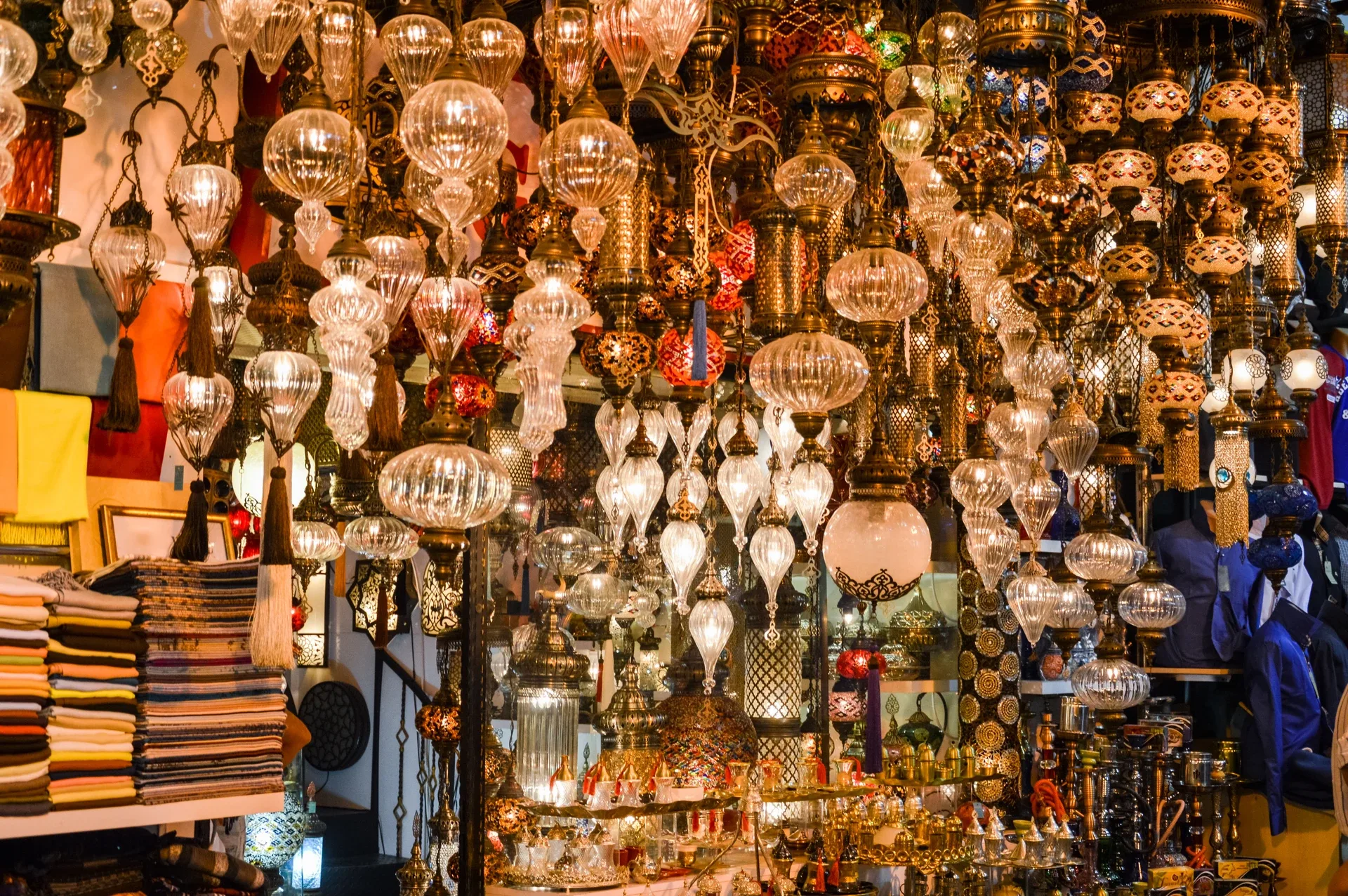
Grand Bazaar (Covered Market): The largest and oldest functioning shopping center in the world. The Ottoman Sultan Mehmed II built the Grand Bazaar in the 15th century. The market consists of 5,000 stores, 66 streets, 24 gates, and much more eye-pleasing architecture. Your guide will be more than happy to assist you in finding your masterpiece of Turkish art upon your request.
After the PrivateIstanbul Old City sightseeing tour, you will be driven back to the hotel.
Choose your experience
Considered in every detail.
Original service options · Final arrangements are confirmed with your personal quotation.
13 questions · Thoughtful answers. Select a question to explore the details.
01What are private Istanbul Old City tours?+
Private Istanbul Old City Tours are tours that focus on exploring the historical and cultural landmarks of Istanbul's Old City. Most of the time, these tours are made to fit the traveler's interests and can be booked with a private guide.
02What are some popular destinations covered in private Istanbul Old City tours?+
Private Istanbul Old City Tours usually cover popular destinations like the Hagia Sophia, Blue Mosque, Topkapi Palace, Grand Bazaar, and Basilica Cistern. Other popular destinations include the Spice Bazaar, Suleymaniye Mosque, and the Chora Church.
03How long do private Istanbul Old City tours usually last?+
Private Istanbul Old City Tours can last anywhere from half a day to a full day, depending on the itinerary and the traveler's preferences.
04Are private Istanbul Old City tours expensive?+
Private Istanbul Old City Tours can be more expensive than group tours, but the cost can vary depending on the duration of the tour, the number of destinations covered, and the services included. Travelers can find a range of prices for private Istanbul Old City tours and choose one that fits their budget.
05How can I book a private Istanbul Old City tour?+
Private Istanbul Old City Tours can be booked through our travel agency, Romos Travel. You can book it on our website, email, or directly call us.
06Do I need a visa to visit Istanbul?+
It depends on your nationality. Many countries require a visa to enter Turkey, while some are eligible for a visa on arrival. You can check the visa requirements for your country on the Turkish government's official website.
Words from our guests
Journeys remembered.
67 guest reviews
★★★★★
This was hands down the best tour we’ve ever taken. From the moment we were picked up in a luxurious private vehicle, everything was impeccable. The guide was incredibly knowledgeable and had a wonderful way of bringing Istanbul’s history to life. Hagia Sophia left us speechless, and the Basilica Cistern felt like a magical underground escape. We loved how customizable the tour was—our guide ensured we got extra time at Topkapi Palace, which was a dream come true. The Grand Bazaar was a lively and exciting way to end the day. We can’t recommend Romos Travel enough!
Elizabeth and Robert Taylor (USA)2017-07-31★★★★★
This tour combined everything we love—history, culture, and a touch of luxury. Our guide was a walking encyclopedia, explaining every detail about the Hippodrome, Hagia Sophia, and Topkapi Palace. The Basilica Cistern was absolutely stunning, and the guide’s stories about its construction were fascinating. The private vehicle was incredibly comfortable and made navigating the city stress-free. Having the guide with us at the Grand Bazaar was a lifesaver—they helped us find beautiful, authentic Turkish art. We left with incredible memories and a much deeper understanding of Istanbul.
James and Olivia Brown (UK)2017-06-27★★★★★
This private tour was everything we hoped for and more. The flexibility to adjust the itinerary was a huge plus for us, and our guide ensured we had plenty of time at the sites we were most excited about, like Hagia Sophia and the Basilica Cistern. The attention to detail was exceptional, and we felt pampered every step of the way. Traveling in the private vehicle made the experience even more comfortable and relaxing. The Grand Bazaar was a fun way to end the day, and we appreciated the guide’s tips on finding high-quality souvenirs. This tour is worth every penny!
Wei Lin and Zhang Ming (Singapore)2017-05-07★★★★★
We were traveling with two teenagers, and this tour managed to keep everyone engaged and entertained. The guide was incredible—full of energy, knowledge, and patience. The Hippodrome and Basilica Cistern were the kids’ favorites, and we loved the peaceful beauty of the Blue Mosque. The private vehicle made everything so convenient, especially in the summer heat. The Grand Bazaar was a fun stop, and the guide helped us find unique souvenirs to take home. This tour was perfectly tailored for our family, and we’re already looking forward to booking another one with Romos Travel.
The Harrison Family (Australia)2017-05-02★★★★★
We can’t say enough good things about this tour. The guide was friendly, professional, and incredibly knowledgeable. Hagia Sophia was the highlight of the day—it’s impossible to describe how awe-inspiring it was to stand in such a historic place. The Basilica Cistern was a close second, with its eerie beauty and fascinating history. The private vehicle added a touch of luxury and made navigating Istanbul so easy. The Grand Bazaar was a vibrant and exciting way to end the day. Romos Travel went above and beyond to ensure this was a truly memorable experience.
Gabriela and Carlos Hernandez (Mexico)2017-06-23★★★★★
This tour was a masterpiece of organization, luxury, and cultural immersion. Our guide was an expert storyteller, making every stop, from the Hippodrome to the Grand Bazaar, come alive. Hagia Sophia was an unforgettable highlight, and the Basilica Cistern felt like stepping into a hidden world. We appreciated how seamless everything was—the private vehicle was always waiting for us, and the guide tailored the itinerary to our interests. This is how every tour should be—relaxed, informative, and completely stress-free.
Isabella and Marco Moretti (Italy)2017-08-12
Private Istanbul Old City Sightseeing Itinerary
Private Istanbul Old City Sightseeing Itinerary
How to plan a private walk through Sultanahmet
This private Istanbul Old City tour brings the historic peninsula’s monuments, streets and squares into one walking route. Tell your guide whether your priority is religious architecture, imperial history or time inside specific buildings. Those choices help decide what to explore at length.
When several Sultanahmet visits sit close together, it is tempting to estimate the entire walk by distance alone. The more important limit is how much time you want inside particular buildings and how long the group prefers to stand. Put the interior that matters most first in the planning conversation so the rest of the route can work around it.
Read this experience as a series of choices about time, place and the people you are travelling with. Write down what made you open this page before you start comparing it with other options. If there are several people in the group, ask each person for one thing they would be disappointed to miss. That small exercise makes it easier to see which experiences are central to the trip and which would be pleasant if the timing works.
Then decide whether the experience should be the focus of a day or part of a longer plan. Compare from the first pickup to the last drop-off. Look at the time you can actually spend at the places that matter, allowing for the intervals in between. A long programme on paper can still leave very short visits if transfer time, a meeting point or a return deadline has been left out of the comparison.
For a day itinerary, the difference between available hours and useful time at the destination matters more than the name of the package. Use the published programme to see where the day’s main experience sits before deciding what else can fit.
Getting to the Old City
Agree a clear meeting point and ask how your hotel’s location affects the first stop. Allow for the final approach on foot if the streets are busy or have vehicle restrictions.
Draw the approach as three steps: where you start, where you actually meet, and where the planned activity begins. These can be different even if the hotel or a transport hub is mentioned on the itinerary. Save the confirmed meeting address and a written description of the entrance. If the party is coming from different rooms, hotels or terminals, decide where everyone rejoins before anybody sets out on their own.
Separate the time you need to be present from the time a vehicle, guide or venue expects to start. That distinction is useful on arrival days and when the first planned stop has a fixed window. Carry the written confirmation somewhere you can open it offline. Check how to contact the organiser if the first arrangement changes after you have left, and agree who in the group will make that call.
Do a short rehearsal on the map without relying on the map’s estimated driving time alone. Think about the final approach, building entrances, stairs and luggage, then include the time needed to gather the group at the start. If one person is likely to need more time, plan to meet the party together at the point that works for them. A practical start makes the following itinerary easier to keep flexible.
Connect Sultanahmet’s monuments and public spaces
Use the Sultanahmet walking itinerary to understand how a mosque, a palace and a public square fit together. If your interest is one historic period, tell the guide before setting off so they can use nearby stops to develop the same story.
Choose two things that deserve a close look and decide what an overview would be enough for. Let the first have room for questions, interruptions and a change of perspective. At the second, pay attention to a detail you might miss if you were moving quickly. That could be the relationship between two buildings, the way the waterfront meets a neighbourhood, or how a venue uses its space. The purpose of choosing is to give those details time.
Ask which parts need advance arrangements and which are easier to interpret or experience once you are there. For an interior, consider the time needed to get in, orient yourself and spend a few minutes without feeling rushed. Where the experience mainly happens outside, ask how the proposed position, light, season or weather could change your view. Those are better ways to compare proposals than counting the number of stops listed.
Give the team a practical example of your interest. An interest in history could mean the layout of an ancient city, the way a particular palace was used, or a wish to understand an active cultural tradition. A wish for comfort could mean a particular seat, a less hurried route or space for a conversation. Examples make a brief actionable and invite the organiser to suggest something specific to this experience.
Handling interiors, lines and walking
Ask which visits use timed access and which are easier to adapt. Tell the guide about prolonged standing, stairs, or quieter places you would like to use for breaks.
If the guide expects a timed palace visit, discuss the market or an exterior stop as a flexible part of the sequence. On a day where access changes, a stop that remains in the same neighbourhood does more to preserve the rhythm of the visit than a major detour. Relative proximity is a useful guide, but practical entrances and gathering points are more important.
Describe access in terms of what someone is comfortable doing for a sustained period. Include stairs, uneven ground, boarding, standing and the distance between useful places to stop where applicable. People with the same broad requirement can have very different preferences. One traveller may be comfortable walking slowly but prefer to avoid steep steps; another may want a short standing period with a reliable place to sit afterwards.
Ask whether the plan can be adjusted without losing its main purpose. A shorter route can work well if it still includes the setting or explanation you wanted. If the group may split for one part, agree where to meet again and how long each part should take. Share which requirements are essential and which are preferences so the organiser can check them against the actual vehicle, venue or proposed route.
Consider comfort across the entire outing. A long interval without a chance to pause can matter more than the length of a single walk. Discuss shade, seating and a convenient break before confirming a busy stretch. If a person uses an aid or needs help getting in and out of a vehicle or venue, ask for the specific approach and space that will be available rather than relying on a general accessibility label.
Markets vs monuments
Time in a market is rewarding if you want room to explore. Agree what you want to see in the Grand Bazaar before fitting it around the monuments that brought you to the Old City.
Mark the parts of the plan that depend on an outside decision, such as the order of timed visits, operating conditions or a transport connection. Keep them separate from changes your own group could make. This shows whether an alternative would require changing a booking or simply making a different choice while you travel. It also makes it easier for the organiser to explain what they can confirm for your date.
Build in one realistic alternative and discuss when you would choose it. Identify what would cause you to switch, who has the final information and which other parts of the day would be affected. A nearby break, a shorter visit or a change of sequence may keep the day worthwhile. An alternative works best when it serves the same interest and does not add a new fixed deadline.
Use local time when comparing the sequence in a written itinerary. If a piece of the journey is uncertain, leave the commitments around it movable until the important details are confirmed. For a fixed onward booking, tell the organiser the time by which you personally want to be there. That is more useful than giving just the departure time, because it includes the margin your group is expecting.
Keep the final time you need to be back in view throughout the day. A stop that looks easy to add at the start can make the last part feel rushed if travelling back involves a different route or a fixed booking.
Lunch can shape the route
Choose a break near the next stop to keep the afternoon practical. Give the guide advance notice of dietary requirements and whether you prefer a short pause or a longer meal.
Think about what you want from the time around the planned experience. You might want to be close to a particular neighbourhood after it finishes, travel directly to a hotel, or have time for a meal or a quiet pause. That preference can affect the route even when it is not an activity in its own right. Identify how each member of the group will use the time that is left free.
Where there is a choice of base or end point, compare the actual approach as well as how a place looks in a description. Consider the length of the next transfer, the final walk, and whether you can change your mind about a meal or short outing without rearranging a vehicle. Ask the team to mark the difference between time reserved in the itinerary and time you will arrange independently.
Leave one natural break in the right place rather than expecting several quick stops to make the plan feel restful. Timing a pause near a useful transition can improve the whole day. If you have a restaurant, room or evening arrangement in mind, state whether it is a firm commitment or a preference. That allows the organiser to take it into account without treating it as another confirmed inclusion.
When there is just one day, a break near the main route can be a better use of time than travelling to a separate destination for it. Identify what would make the pause enjoyable in its own right.
Give the historic peninsula and the Bosphorus their own time
Keep Old City sightseeing concentrated if you want to see interiors properly. If you also want to read the city from the water, plan the private Bosphorus sightseeing cruise separately so neither outing needs to be rushed.
Ask the guide to include the connecting story between the palace, mosque and historic square rather than explain each place in isolation. A few minutes to look back across the square after an interior can make the layout easier to understand and give the group time to ask a better question.
Compare the alternatives by asking what you would gain and what you would spend time on. For each option, write down one reason you would choose it, one element you would have to give up, and one thing you would want the team to verify. Do the comparison with your actual dates and group in mind. A longer or more elaborate arrangement is worthwhile only if the extra time solves a real priority for you.
Keep one flexible element in the plan that does not affect everyone’s bookings. If the group decides to linger, pause or reorder the day, that element can move without losing the central experience. Ask which parts can be changed after confirmation and which might have change terms. This matters particularly if you are coordinating a separate guide, vehicle, ticket or onward arrangement for the same day.
What to confirm before the tour
Ask which sites are confirmed for your date, which tickets are covered and where the itinerary can adapt to access or closure changes.
Put the facts that determine the quotation at the start of your message. Give dates, group size, your starting location and the commitments that cannot move. Follow with what you want to prioritise, where you are flexible and the access or comfort requirements the organiser needs to consider. If your dates are uncertain, explain which range is possible. Keep the brief short enough that the team can see what matters without searching for it.
Read the reply as a proposed sequence and a list of responsibilities. Check where each arrangement begins and ends, who is providing it, what appears in the quoted price and what would be settled separately. Make sure changes to the programme or the experience are easy to distinguish from optional requests. Where cancellation or a change in conditions is possible, ask how the confirmed booking terms would apply to your particular arrangement.
Before committing, check the dates and names against the rest of your trip. Ask the organiser to confirm any assumptions you had to make while reading the programme, and keep the written reply with your travel details. Once the important parts are clear, mark which choices you would prefer to make during the experience. That final distinction is what lets the plan feel considered without taking away the freedom to use your time well.