Ephesus, a City Shaped by the Aegean
At Ephesus, the ancient world takes the form of a city you can begin to understand on foot. A street leads from civic buildings towards a library. A monumental theatre faces the route to a vanished harbour. Behind an elegant frontage, the remains of a house reveal how a prosperous family received its guests.
The archaeological site lies near Selçuk in İzmir province, inland from the Aegean coast. Kusadasi provides a convenient coastal base for a visit, while Selçuk connects the ruins with a wider landscape of museums, sanctuaries and historic buildings.
Ephesus was once closely connected to the sea. Over centuries, river sediment altered the coastline and complicated access to its harbour. The landscape changed, and settlement shifted with it. That long relationship between a city and its surroundings is part of the significance of the Ephesus World Heritage property, inscribed by UNESCO in 2015.
A Brief History of Ephesus
The history of Ephesus reaches far beyond its famous Roman monuments. Earlier settlements and the sanctuary of Artemis established the area's importance before the city took the form most visitors recognise today. Around 300 BCE, the Hellenistic ruler Lysimachus established a new city between the surrounding hills.
Roman rule brought further development. Ephesus became a major centre of the province of Asia, and wealthy patrons helped finance buildings that expressed both civic ambition and personal prestige. Libraries, fountains, baths and meeting places became part of an elaborate urban landscape.
The city continued to change in late antiquity, when Christianity reshaped its religious life. Earthquakes, rebuilding, environmental pressures and shifts in settlement all contributed to its later history. The ruins therefore preserve different periods and repeated adaptations, rather than a single moment when the whole city stood still.
What to See in Ephesus
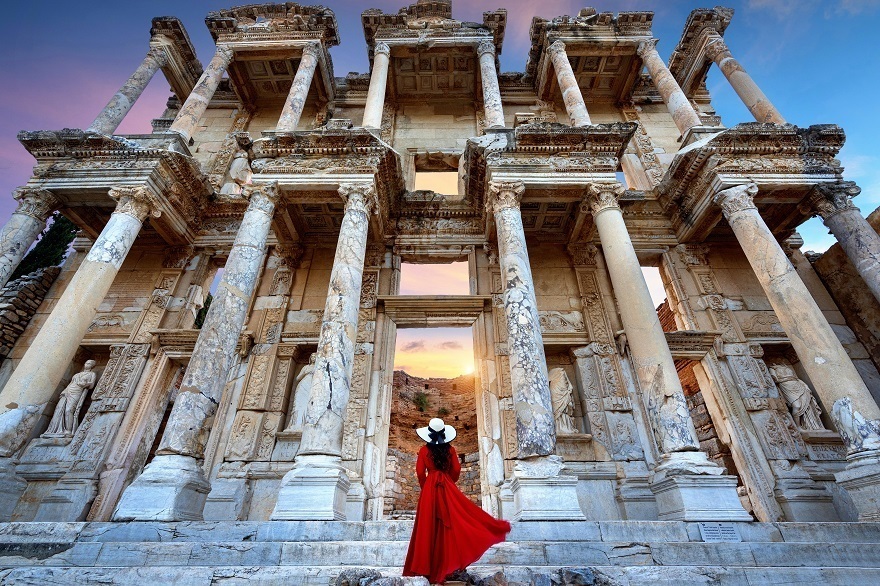
The Library of Celsus
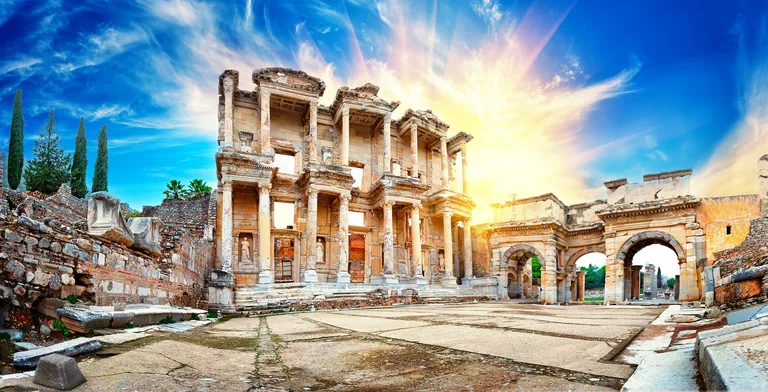
The Library of Celsus gives Ephesus its most recognisable architectural image. Its two-storey marble façade brings together columns, niches and carefully arranged details that reward a closer look after the first photograph.
Built in the early second century CE to commemorate the Roman senator Celsus, the building combined a public library with a memorial. His burial chamber lay beneath it, connecting the city's intellectual life with the remembrance of an influential individual.
The façade seen today also tells a modern story. It was reconstructed between 1970 and 1978 using surviving ancient elements and supplementary materials. Understanding that work adds another dimension to the visit: the monument reflects both Roman design and the continuing effort to conserve an archaeological site. Views and access around historic structures can vary during conservation work.
Curetes Street
Curetes Street helps make sense of the city's layout. Following an older sacred processional route, it linked the political institutions of the upper city with the commercial and cultural spaces below.
Walk slowly enough to notice the buildings along it. The street brings monuments into relation with one another: a fountain, a commemorative façade, the entrance to a residential area. Viewed together, they suggest how public display and everyday movement shared the same urban space. Ask your guide to explain the changes in level and direction, as well as the individual monuments; the route itself is an important part of the story.
The Temple of Hadrian
The small monument commonly called the Temple of Hadrian is particularly rewarding for visitors interested in architectural detail. Its distinctive arched frontage honours the emperor, while reliefs associated with the city's foundation story introduce the relationship between local identity and imperial power.
Some features belong to later alterations. A guide can help distinguish these phases and explain why a familiar monument may contain evidence from more than one period. Allow time to look closely at its surviving decoration.
The Fountain of Trajan
The Fountain of Trajan shows how water provision could become a public statement. Its elaborate architectural setting once framed an imperial statue above the water basin, joining a practical urban need with the image of Roman authority.
The remains include elements raised again in modern times. Read the structure with that history in mind, and consider how flowing water, sculpture and architecture would have worked together within the street.
The Terrace Houses
The Terrace Houses bring the visit into the homes of affluent Ephesians. Built on the hillside, these residences were arranged around courtyards and included spaces for receiving guests as well as the practical work of running a household.
Mosaics, wall paintings and marble decoration reveal the care invested in domestic interiors. Look at the relationship between rooms, the decoration selected for formal spaces and the contrast with simpler working areas. These details offer a more personal view of Roman life than a public façade alone can provide.
For travellers interested in art, design or daily life, the houses deserve time of their own. Discuss their inclusion when planning the day, and confirm whether your admission arrangement covers them. The route involves changes of level; anyone with mobility needs should ask about the current visitor route before committing to this part of the visit.
The State Agora, Odeon and Prytaneion
In the upper city, the State Agora formed part of Ephesus's political centre. Nearby, the building known as the Odeon or Bouleuterion accommodated meetings and smaller performances, while the Prytaneion was associated with official ceremonies and the city's sacred hearth.
These spaces help explain how Ephesus governed and represented itself. Although their remains can initially seem less immediately striking than the library, they provide the institutional background to the city around them. They are useful places to discuss who exercised influence, how public decisions were made and why civic buildings occupied such prominent positions.
The Commercial Agora and the Harbour Route
The Commercial Agora, also known as the Tetragonos Agora, served a different purpose from the State Agora. Its courtyard and surrounding colonnades accommodated commercial premises and offices, making it central to the city's economic life.
Marble Street and the broad harbour avenue, usually called the Arcadiane, place these commercial spaces within a larger network of movement. The harbour avenue connected the theatre area with the port. Looking along it today, with the sea no longer at its ancient edge, makes the changing landscape especially tangible.
Consider the city from the perspective of an arriving merchant: a landing place, a route inland, a marketplace and the public buildings that announced the city's prosperity. This is a useful way to connect the individual ruins into a coherent urban story.
The Great Theatre
The Great Theatre reveals another side of public life. Its origins lie in the Hellenistic period, and substantial Roman enlargements helped create the monumental building visible today.
The theatre hosted performances and public gatherings; its later history also included arena spectacles. Its significance therefore extends beyond entertainment. It was a place where large numbers of people could assemble and where the city could express itself collectively.
Pause to appreciate the relationship between the seating, performance area and surrounding landscape. The experience becomes more rewarding when the theatre is considered alongside the agora and harbour route, as part of the working city. Follow the marked visitor route and any current restrictions on access.
Faith and the Changing City
Ephesus's religious history includes the worship of Artemis, Roman imperial traditions and the growth of Christianity. Within the ancient city, the Church of Mary is associated with the Council of Ephesus held in 431, an important event in early Christian history.
It is helpful to distinguish this church from the House of the Virgin Mary, which is a separate pilgrimage destination in the surrounding hills, and from the Basilica of St John in Selçuk. Each belongs to a different setting and offers a different perspective on the region's religious heritage. A visit focused on Christian history should allow for those separate locations.
The Ephesus Archaeological Museum in Selçuk
The Ephesus Archaeological Museum is a rewarding companion to the ancient city. Its collections include sculptures of Ephesian Artemis and objects recovered from Ephesus and its surroundings, bringing individual works of art into closer view.
At the ruins, attention naturally moves towards streets and large buildings. In the museum, the focus can shift to sculpture, jewellery, coins and smaller objects. Combining the two helps connect architectural spaces with the people, beliefs and material culture associated with them.
This is the archaeological museum in Selçuk. When discussing an itinerary, ask for it by name so that it is clear which museum experience is included.
Places to Visit Near Ephesus
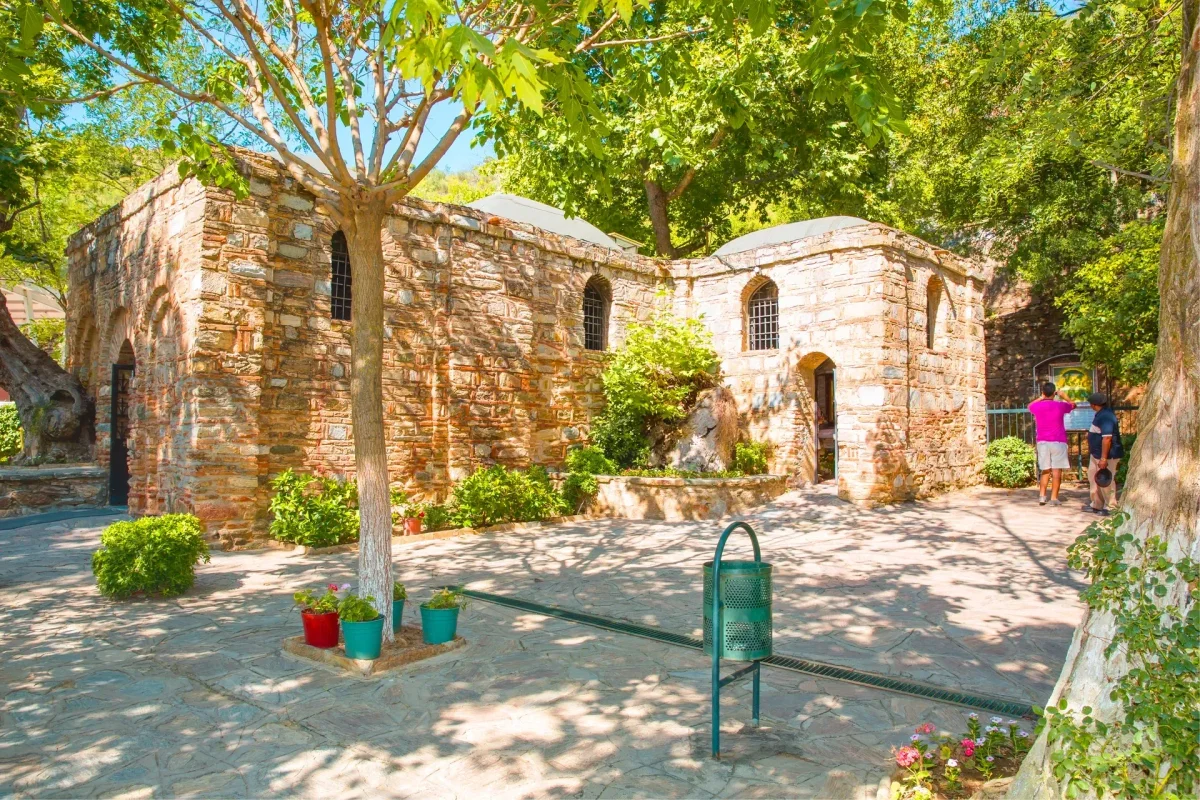
The House of the Virgin Mary
On Bülbül Mountain, the House of the Virgin Mary is a place of pilgrimage associated by Christian tradition with Mary's later life. That association is a matter of religious tradition, rather than a residence conclusively established by archaeological evidence.
The setting offers a quieter change of pace from the ancient city's monumental streets. Treat it as a separate stop, allowing time for the journey and for a respectful visit to a place that continues to hold spiritual meaning.
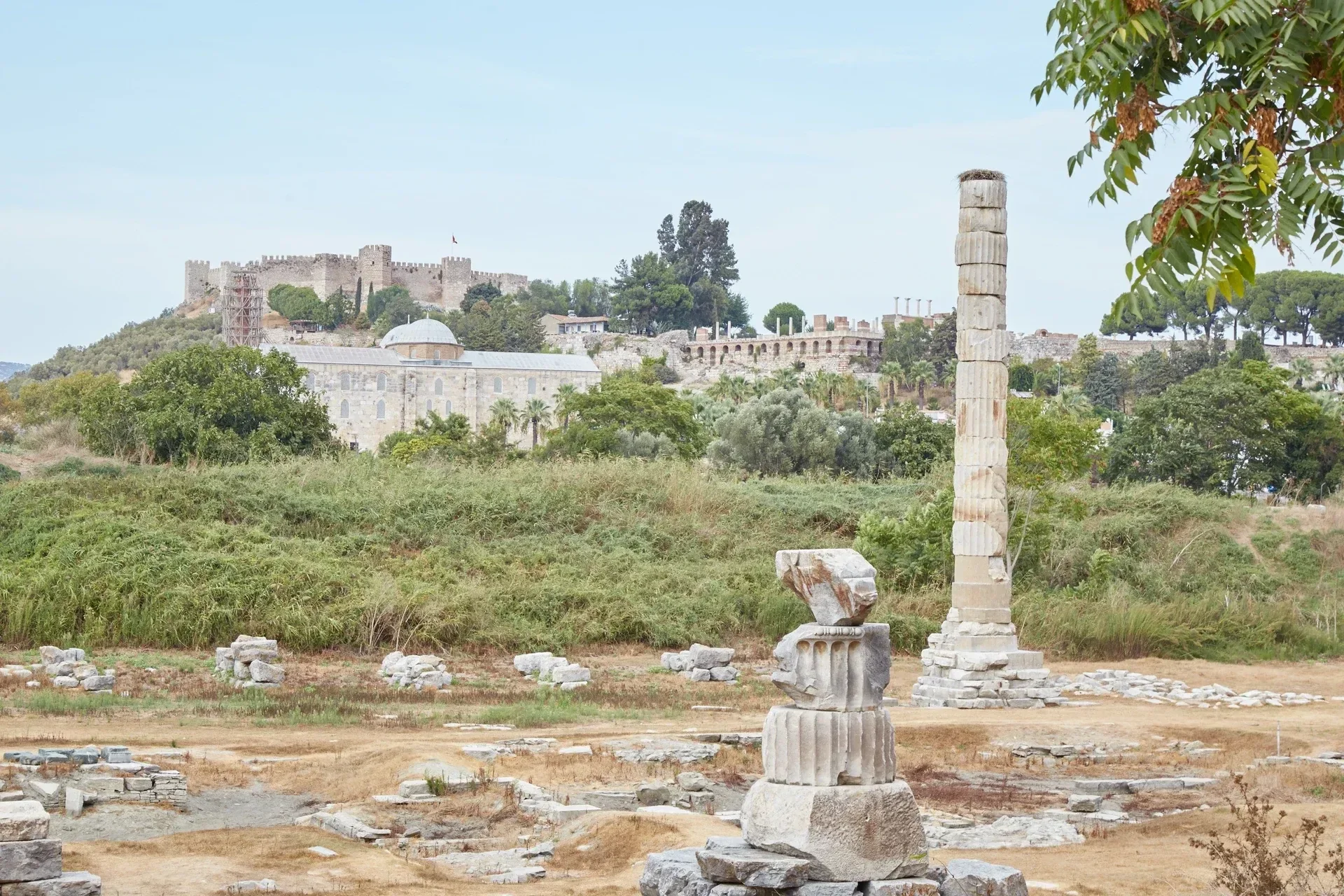
The Temple of Artemis
The Temple of Artemis belonged to one of the great sanctuaries of the ancient Mediterranean and was celebrated among the Seven Wonders of the Ancient World. Today, its surviving remains are limited, so explanation and historical context are especially valuable.
A visit connects the Roman city with an older religious centre. Pairing the temple site with the Artemis sculptures in the Selçuk museum helps make that connection easier to understand.
The Basilica of St John and Isa Bey Mosque
On Ayasuluk Hill, the remains of the Basilica of St John belong to a major sixth-century church built under Emperor Justinian I, over the traditional burial place of the apostle. Nearby, Isa Bey Mosque, commissioned in 1375, introduces the architecture of the Aydınoğulları period.
Together, these landmarks broaden the visit beyond Roman Ephesus. They make the region's later history visible and show why Selçuk deserves attention as a destination in its own right.
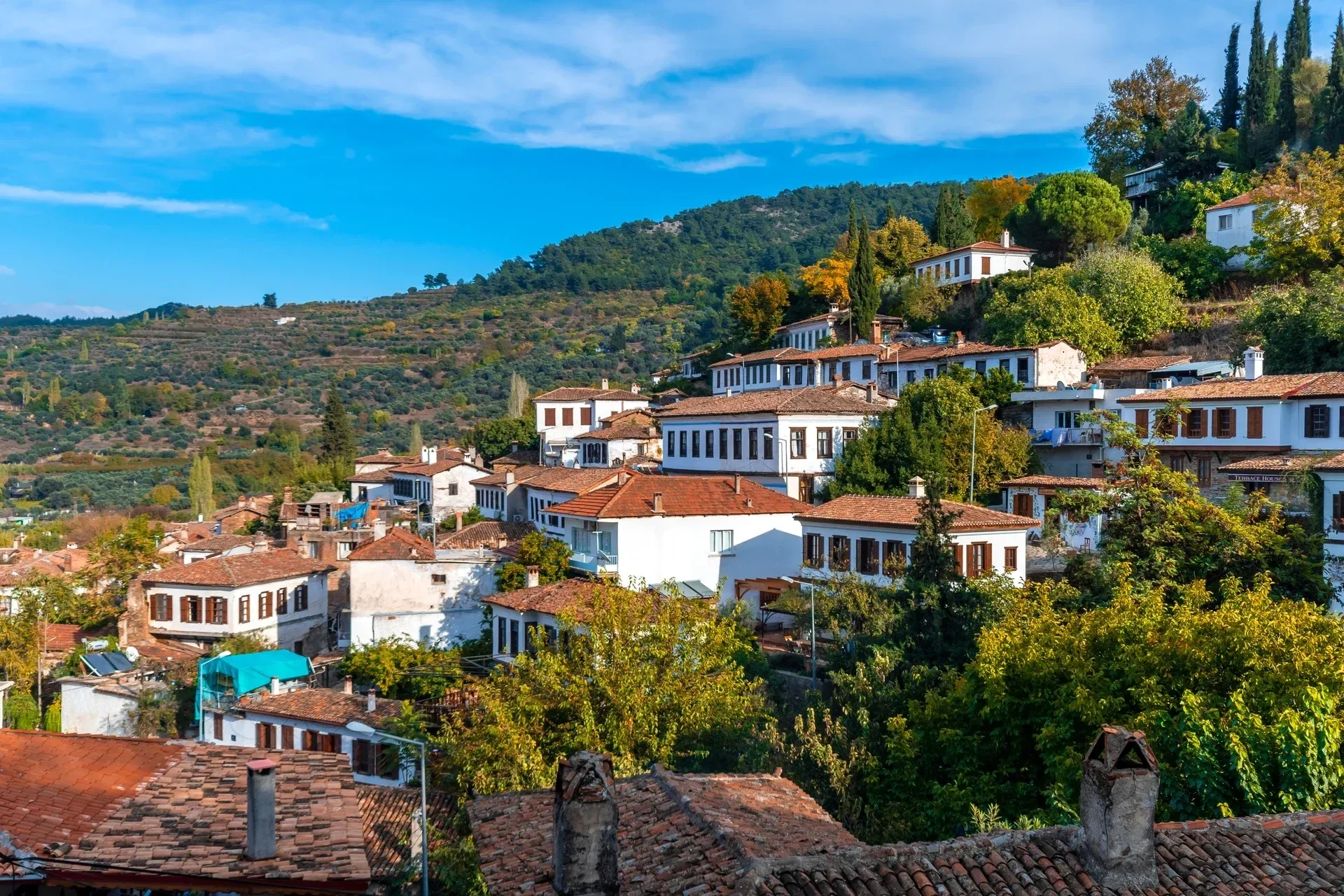
Şirince Village
Şirince Village offers another change of setting, with traditional houses, narrow lanes and a rural history shaped by the population exchange of the early twentieth century.
Consider it for a village walk and a leisurely meal after the archaeological visit, provided the day has enough room. Leave space to enjoy the village without turning it into a hurried final stop between transfers.
Planning Your Ephesus Visit
Allow Time for the Details
For a first visit, set aside an unhurried part of the day for the ancient city. Travellers who enjoy architecture, archaeology or photography may prefer to devote more time to it. Adding the Terrace Houses, the Selçuk museum and several nearby sites can justify a full day or a more relaxed stay in the region.
Choose the priorities before deciding how many places to include. A visit centred on Roman daily life will have a different rhythm from one focused on pilgrimage or a brief introduction during a cruise call. The most satisfying itinerary allows enough time to understand the places you have chosen.
Walking Conditions, Weather and Access
Plan for outdoor walking, uneven stone surfaces and changes of level. Comfortable footwear with a reliable grip, drinking water and sun protection help make the visit more comfortable. Check the forecast and arrange breaks around the conditions on the day.
If anyone in your party uses a wheelchair, has difficulty with steps or needs frequent rests, discuss that before booking. Ask which parts of the proposed route are suitable and whether the Terrace Houses can be included comfortably. An itinerary should reflect the needs of the people travelling.
Confirm current opening arrangements, ticket inclusions and any conservation restrictions close to your visit. Where different entrances are available, agree the meeting and collection points with your guide or driver in advance.
Visiting from Kusadasi on a Cruise Call
For guests arriving through Kusadasi, begin planning with the ship's confirmed arrival and all-aboard times. Build the programme around the available time ashore, including transfers and a sensible return margin.
If the call is short, focus on Ephesus and select additional stops carefully. If more time is available, discuss whether the Terrace Houses, the House of the Virgin Mary or another nearby place best matches your interests. Confirm the meeting instructions and return plan before the day of travel.
Discover Ephesus with LuxuryTourTurkey
A private Ephesus visit can be shaped around what interests you most: Roman architecture, domestic life, early Christianity, photography or a first introduction to the Aegean's ancient cities. Tell our team what you would like to explore, how much time you have and the pace that feels comfortable for your party.
You can discuss Ephesus as part of a stay in Kusadasi, a cruise itinerary or a wider journey through Turkey. Our Ephesus tour from Istanbul and Istanbul and Ephesus itinerary offer starting points for that conversation. Contact our team to plan the route, guiding and practical arrangements for your visit.