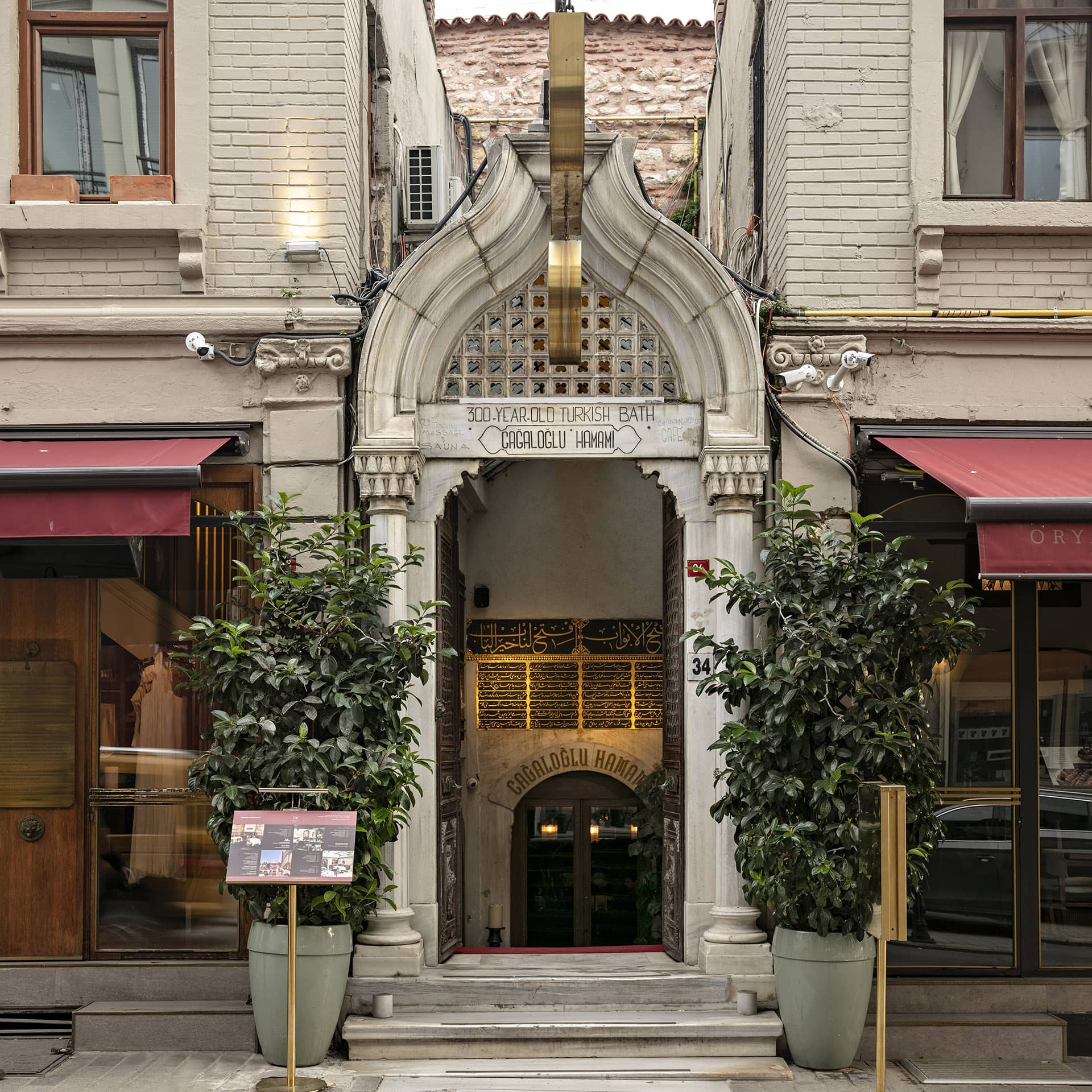
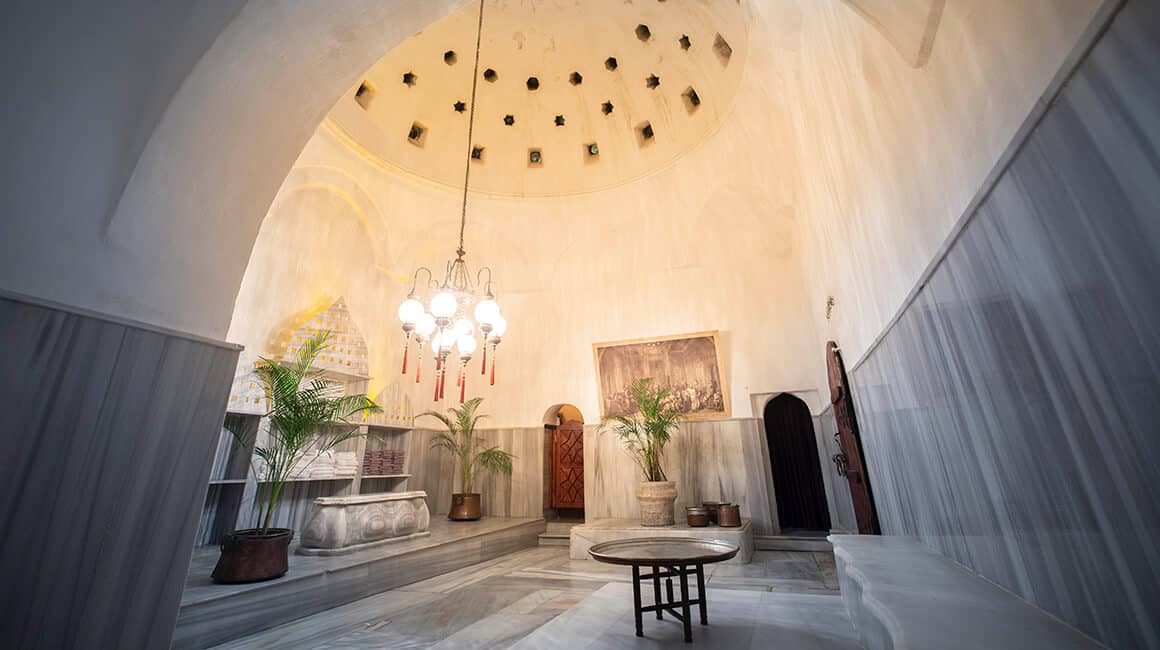
THE ISTANBUL DREAM SERVICEOperating for over 300 years, the Cağaloğlu Hamam offers a dreamlike journey back in time. Immerse yourself in the old-world charm of Istanbul with a relaxing ritual:15 minutes of secluded hot room rest, akin to a sauna.10 minutes of exfoliation using a private, single-use bath glove (kese).20 minutes of indulgent bubble bath (foam massage).Conclude your experience with delightful treats, including Turkish tea, homemade sherbet, and Turkish delight, leaving you refreshed and ready to explore Istanbul once more.Short Summary15 min. hot room rest (like a sauna).10 min. rubbing with a single-use kese.20 min. bubble bath
Your private experience
An Istanbul Turkish bath. Time to unwind, beautifully.
THE ISTANBUL DREAM SERVICE
Operating for over 300 years, the Cağaloğlu Hamam offers a dreamlike journey back in time. Immerse yourself in the old-world charm of Istanbul with a relaxing ritual:
15 minutes of secluded hot room rest, akin to a sauna.
10 minutes of exfoliation using a private, single-use bath glove (kese).
20 minutes of indulgent bubble bath (foam massage).
Conclude your experience with delightful treats, including Turkish tea, homemade sherbet, and Turkish delight, leaving you refreshed and ready to explore Istanbul once more.
Short Summary
15 min. hot room rest (like a sauna).
10 min. rubbing with a single-use kese.
20 min. bubble bath (foam massage).
Treats: Turkish tea, homemade sherbet, and Turkish delight.
IMPORTANT INFORMATION
All guests receive linden shampoo, hair cream, body lotion, 100% olive oil Ayvalık soap, single-use slippers, towels, and a breechcloth.
Pregnant guests are not allowed to receive services.
Guests with heart disease, diabetes, or asthma are advised against using the bath.
Guests who are famished, full, or recently consumed alcohol should avoid the bath.
Children under 6 years old are not permitted, and guests under 18 must be accompanied by an adult.
DISCLAIMER The Cağaloğlu Hamam takes no responsibility for any incidents related to the above-mentioned conditions.
THE OTTOMAN LUXURY SERVICE
Experience the grandeur of the Ottoman Empire with our Ottoman Luxury Service, a complete indulgence fit for royalty:
Begin with 15 minutes of hot room rest.
Follow with 10 minutes of exfoliation using a private, single-use bath glove (kese).
Enjoy 35 minutes of luxurious bubble bath (foam massage). Complete the ritual with 45 minutes of aromatherapy massage using soothing linden oil in a private room.
Savor the royal hospitality with Turkish tea, homemade sherbet, Turkish delight, appetizers, and fresh fruit. Feel rejuvenated and enveloped in the essence of Ottoman elegance.
Short Summary
15 min. hot room rest (like a sauna).
10 min. rubbing with a single-use kese.
35 min. bubble bath (foam massage).
45 min. aromatherapy massage (in a private room).
Treats: Turkish tea, homemade sherbet, Turkish delight, appetizers, and fruit.
With Romos Travel, a licensed and registered local tour operator in Turkey, you can enjoy a seamless travel experience with no middlemen, no hidden charges, and guaranteed reservations. Established in 2009, we operate offices in Istanbul, Cappadocia, Ephesus, Antalya, and Pamukkale to provide exceptional service and ensure your journey is unforgettable.
Istanbul Turkish Bath Services
We offer separate sections for males and females to ensure privacy and comfort.
15 questions · Thoughtful answers. Select a question to explore the details.
01What happens during a traditional hammam visit?+
A visit can combine a warm room, a scrub and a foam wash. Check which steps are included at your chosen bath.
02What is the difference between a hammam and a spa massage?+
The hammam centers on bathing and cleansing. An oil massage is often a separate treatment.
03Is a Turkish bath private or communal?+
The venue and package determine who shares the rooms. Ask about a private booking if privacy matters.
04Are sessions separated by gender?+
Policies differ by bath and time slot. Confirm the arrangements with your venue.
05Can couples book a hammam together?+
Ask which venues offer a shared private treatment and how it is staffed.
06What should I bring to a Turkish bath?+
Ask whether the venue supplies a towel, wrap and slippers, and what it asks guests to wear.
Planning a Privately Arranged Istanbul Turkish Bath Visit
Planning a Privately Arranged Istanbul Turkish Bath Visit
What to confirm for a privately arranged hamam visit
An Istanbul Turkish bath visit starts with choosing the venue and the session that suits your group. Ask whether any spaces are shared, how much time is set aside for the treatment and which parts of the visit can be arranged privately.
Before arranging an Istanbul hamam, decide what draws you to it. You may be interested in the historic bathing space, in the steps of a traditional visit, or in taking a break from sightseeing. The right venue and session should make that priority easy to pursue. Ask what parts of the experience are timed and where you can pause at your own pace.
Read this experience as a series of choices about time, place and the people you are travelling with. Write down what made you open this page before you start comparing it with other options. If there are several people in the group, ask each person for one thing they would be disappointed to miss. That small exercise makes it easier to see which experiences are central to the trip and which would be pleasant if the timing works.
Then decide whether the experience should be the focus of a day or part of a longer plan. Compare from the first pickup to the last drop-off. Look at the time you can actually spend at the places that matter, allowing for the intervals in between. A long programme on paper can still leave very short visits if transfer time, a meeting point or a return deadline has been left out of the comparison.
Identify the boundary of the service before comparing it with a complete itinerary. If a different provider is handling your next activity, tell the team when responsibility passes from one arrangement to the other.
Find the venue and allow arrival time
Ask where to enter and whether changing or check-in takes place before your scheduled session. Keep the other appointments on the day separate from the hamam booking time.
Draw the approach as three steps: where you start, where you actually meet, and where the planned activity begins. These can be different even if the hotel or a transport hub is mentioned on the itinerary. Save the confirmed meeting address and a written description of the entrance. If the party is coming from different rooms, hotels or terminals, decide where everyone rejoins before anybody sets out on their own.
Separate the time you need to be present from the time a vehicle, guide or venue expects to start. That distinction is useful on arrival days and when the first planned stop has a fixed window. Carry the written confirmation somewhere you can open it offline. Check how to contact the organiser if the first arrangement changes after you have left, and agree who in the group will make that call.
Do a short rehearsal on the map without relying on the map’s estimated driving time alone. Think about the final approach, building entrances, stairs and luggage, then include the time needed to gather the group at the start. If one person is likely to need more time, plan to meet the party together at the point that works for them. A practical start makes the following itinerary easier to keep flexible.
Understand what the hamam session includes
Discuss the hamam session and scrub before booking so you know what is included and what you can decline. Ask which items the venue supplies and whether you should arrive early to change.
Choose two things that deserve a close look and decide what an overview would be enough for. Let the first have room for questions, interruptions and a change of perspective. At the second, pay attention to a detail you might miss if you were moving quickly. That could be the relationship between two buildings, the way the waterfront meets a neighbourhood, or how a venue uses its space. The purpose of choosing is to give those details time.
Ask which parts need advance arrangements and which are easier to interpret or experience once you are there. For an interior, consider the time needed to get in, orient yourself and spend a few minutes without feeling rushed. Where the experience mainly happens outside, ask how the proposed position, light, season or weather could change your view. Those are better ways to compare proposals than counting the number of stops listed.
Give the team a practical example of your interest. An interest in history could mean the layout of an ancient city, the way a particular palace was used, or a wish to understand an active cultural tradition. A wish for comfort could mean a particular seat, a less hurried route or space for a conversation. Examples make a brief actionable and invite the organiser to suggest something specific to this experience.
Privacy, access and personal comfort
Ask how changing and treatment areas are arranged for your booking. Share mobility needs, sensitivities or comfort questions in advance with the venue.
A visitor’s expectations about changing, treatments and privacy can vary widely. Ask the venue to explain how a proposed session works rather than drawing conclusions from room photographs. If you have a comfort requirement, separate it from preferences that can be changed once you understand the options.
Describe access in terms of what someone is comfortable doing for a sustained period. Include stairs, uneven ground, boarding, standing and the distance between useful places to stop where applicable. People with the same broad requirement can have very different preferences. One traveller may be comfortable walking slowly but prefer to avoid steep steps; another may want a short standing period with a reliable place to sit afterwards.
Ask whether the plan can be adjusted without losing its main purpose. A shorter route can work well if it still includes the setting or explanation you wanted. If the group may split for one part, agree where to meet again and how long each part should take. Share which requirements are essential and which are preferences so the organiser can check them against the actual vehicle, venue or proposed route.
Consider comfort across the entire outing. A long interval without a chance to pause can matter more than the length of a single walk. Discuss shade, seating and a convenient break before confirming a busy stretch. If a person uses an aid or needs help getting in and out of a vehicle or venue, ask for the specific approach and space that will be available rather than relying on a general accessibility label.
If you want to limit exposure to heat
Discuss any health or comfort concerns with an appropriate professional and ask the venue what options exist. Keep the plan flexible if part of the experience does not suit you.
Mark the parts of the plan that depend on an outside decision, such as the order of timed visits, operating conditions or a transport connection. Keep them separate from changes your own group could make. This shows whether an alternative would require changing a booking or simply making a different choice while you travel. It also makes it easier for the organiser to explain what they can confirm for your date.
Build in one realistic alternative and discuss when you would choose it. Identify what would cause you to switch, who has the final information and which other parts of the day would be affected. A nearby break, a shorter visit or a change of sequence may keep the day worthwhile. An alternative works best when it serves the same interest and does not add a new fixed deadline.
Use local time when comparing the sequence in a written itinerary. If a piece of the journey is uncertain, leave the commitments around it movable until the important details are confirmed. For a fixed onward booking, tell the organiser the time by which you personally want to be there. That is more useful than giving just the departure time, because it includes the margin your group is expecting.
If outside conditions affect operation, ask which decision belongs to the venue or operator and when you can expect to hear. Provide a practical contact method that will still work if you are travelling at the time of a change.
Give the rest of the day space
If the venue is near Sultanahmet, pair the bath with Old City sightseeing so you have time to change and rest afterwards. Check how long you want to spend changing, resting and getting back to the hotel.
Think about what you want from the time around the planned experience. You might want to be close to a particular neighbourhood after it finishes, travel directly to a hotel, or have time for a meal or a quiet pause. That preference can affect the route even when it is not an activity in its own right. Identify how each member of the group will use the time that is left free.
Where there is a choice of base or end point, compare the actual approach as well as how a place looks in a description. Consider the length of the next transfer, the final walk, and whether you can change your mind about a meal or short outing without rearranging a vehicle. Ask the team to mark the difference between time reserved in the itinerary and time you will arrange independently.
Leave one natural break in the right place rather than expecting several quick stops to make the plan feel restful. Timing a pause near a useful transition can improve the whole day. If you have a restaurant, room or evening arrangement in mind, state whether it is a firm commitment or a preference. That allows the organiser to take it into account without treating it as another confirmed inclusion.
Build the surrounding day from the confirmed start and finish details. A service can be useful on its own; it becomes easier to use when any separate vehicle, guide or venue understands where it fits.
Read about hamam traditions before choosing a session
If the custom is unfamiliar, read about Turkish bath traditions before deciding what you want from your visit. Ask the venue separately about privacy during the hamam session if the arrangements for changing and treatment matter to your group.
Think about the programme after the visit as well as the trip to the door. A nearby, adjustable plan can be easier than a scheduled transfer across the city soon after the session. Clarify when the appointment begins relative to the arrival time and how long the venue advises reserving for it.
Compare the alternatives by asking what you would gain and what you would spend time on. For each option, write down one reason you would choose it, one element you would have to give up, and one thing you would want the team to verify. Do the comparison with your actual dates and group in mind. A longer or more elaborate arrangement is worthwhile only if the extra time solves a real priority for you.
Keep one flexible element in the plan that does not affect everyone’s bookings. If the group decides to linger, pause or reorder the day, that element can move without losing the central experience. Ask which parts can be changed after confirmation and which might have change terms. This matters particularly if you are coordinating a separate guide, vehicle, ticket or onward arrangement for the same day.
How to request the right appointment
Send the date, group, preferred time, venue interest and comfort preferences. Ask for a description of the session, what is supplied and the rules for changing a booking.
Put the facts that determine the quotation at the start of your message. Give dates, group size, your starting location and the commitments that cannot move. Follow with what you want to prioritise, where you are flexible and the access or comfort requirements the organiser needs to consider. If your dates are uncertain, explain which range is possible. Keep the brief short enough that the team can see what matters without searching for it.
Read the reply as a proposed sequence and a list of responsibilities. Check where each arrangement begins and ends, who is providing it, what appears in the quoted price and what would be settled separately. Make sure changes to the programme or the experience are easy to distinguish from optional requests. Where cancellation or a change in conditions is possible, ask how the confirmed booking terms would apply to your particular arrangement.
Before committing, check the dates and names against the rest of your trip. Ask the organiser to confirm any assumptions you had to make while reading the programme, and keep the written reply with your travel details. Once the important parts are clear, mark which choices you would prefer to make during the experience. That final distinction is what lets the plan feel considered without taking away the freedom to use your time well.