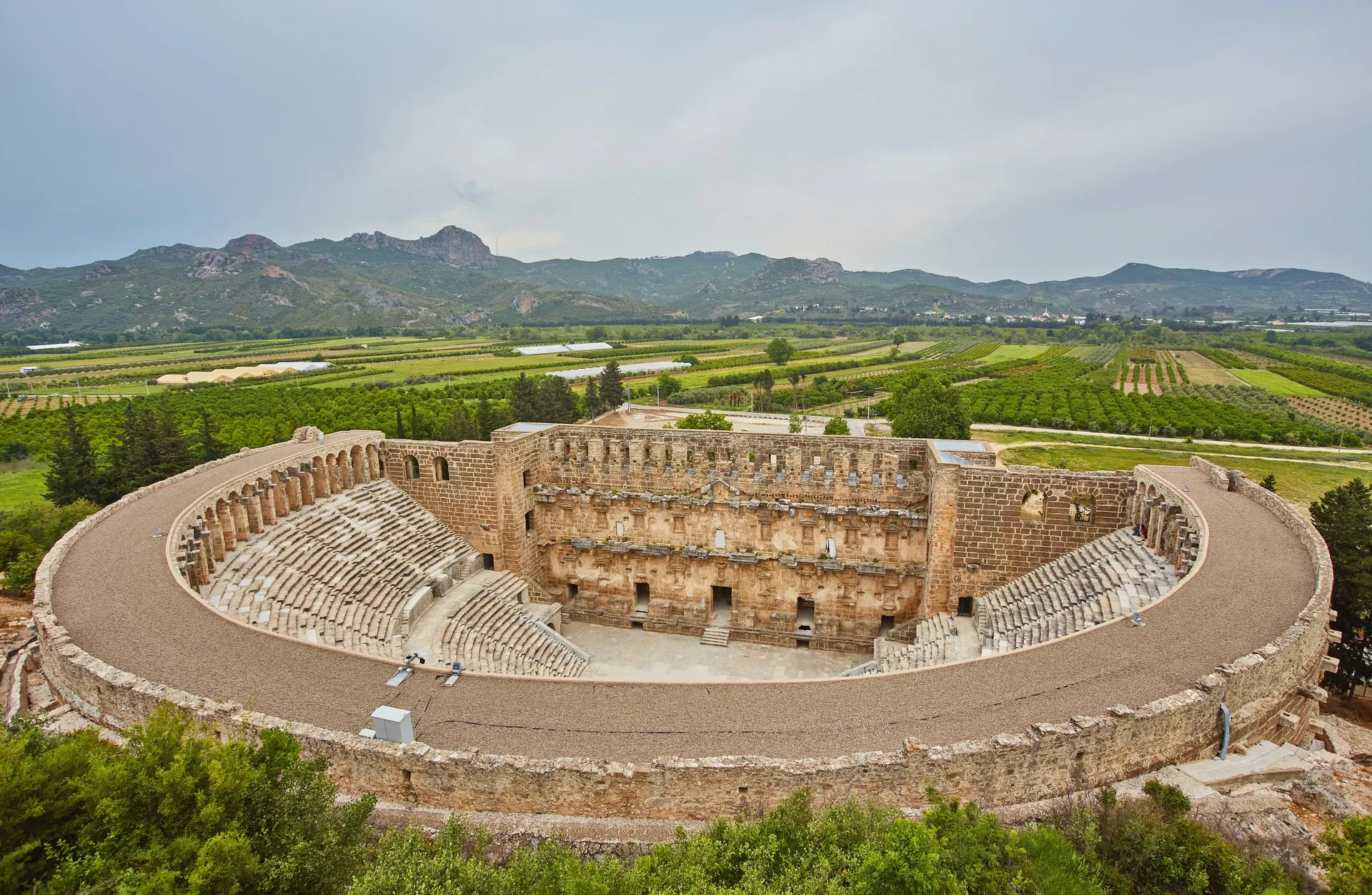
A Remarkable Roman Theatre
The surviving theatre dates to the second century AD, during the reign of Emperor Marcus Aurelius. An inscription identifies its architect as Zenon. The relationship between the curved seating, performance space and substantial stage building remains unusually clear, helping visitors imagine the building as a working place of entertainment.
A guide can draw attention to details that are easy to overlook from a single viewpoint: entrances, changes in level and the way the auditorium meets the hillside. Allow a moment to appreciate the architecture before moving on to photographs.
The Ancient City Beyond the Auditorium
The theatre formed part of a substantial ancient city. Other remains occupy the acropolis above it, while the surviving aqueducts reveal another side of Roman engineering. Their scale provides a useful counterpoint to the carefully enclosed space of the theatre.
Visitors interested in archaeology can ask for an itinerary that allows additional exploration. A gentler visit can focus on the theatre and a selection of viewpoints.
Planning a Comfortable Visit
This is an outdoor archaeological visit with stone surfaces, steps and exposed areas. Comfortable footwear, drinking water and sun protection help make the experience more enjoyable. Walking to higher viewpoints involves a different level of effort from spending time around the main theatre area.
Tell your travel planner about any mobility requirements before the route is arranged. A private visit allows the pace, walking distance and photography stops to be discussed around your interests. Entry arrangements and access to individual areas should be checked for your travel dates.
Include Aspendos in an Antalya Journey
Aspendos works well as the historical focus of an excursion from Antalya or the surrounding resort areas. It can also be considered alongside other regional sights when the driving and sightseeing schedule leaves enough time at each stop.
Luxury Tour Turkey can help shape an Antalya itinerary around your preferred balance of archaeology, city walks and time by the sea. A dedicated excursion to Aspendos gives this exceptional building the attention it deserves.